
Introduction
Butternut squash often shows up in cozy soups and autumn dinners, but its value goes far beyond comfort food. This naturally sweet winter squash packs impressive nutrition into every bite, making it a smart choice for anyone who wants to eat better without sacrificing taste. From supporting immunity to fueling workouts and everyday energy, butternut squash nutrition offers benefits that fit real life. Whether you roast it for a weeknight meal or blend it into a creamy soup, this vegetable delivers both flavor and function.
What Is Butternut Squash?
Butternut squash is a type of winter squash known for its bell shape, smooth beige skin, and bright orange flesh. Unlike summer squash, it matures fully before harvest, which gives it a longer shelf life and a denser nutrient profile. People around the world enjoy it in soups, stews, curries, salads, and even baked goods because it adapts well to both savory and mildly sweet dishes.
Butternut Squash Nutrition Overview
A single cup of cooked butternut squash provides a satisfying balance of carbohydrates, fiber, vitamins, and minerals with relatively few calories. On average, one cup contains around 80 to 85 calories, making it a filling yet light option. Most of its calories come from complex carbohydrates that digest slowly and help maintain steady energy levels. It contains almost no fat and a small amount of plant-based protein, which makes it ideal for balanced meals.
Calories and Macronutrients Explained
Butternut squash calories stay low compared to many starchy foods, yet it feels hearty and filling. The carbohydrates in butternut squash are mostly complex carbs, which means they release glucose gradually instead of causing sharp blood sugar spikes. This makes it suitable for people managing blood sugar levels when eaten in reasonable portions.
The fiber content supports digestion and helps you feel full longer, which can reduce unnecessary snacking. While it is not a high-protein food, pairing butternut squash with beans, lentils, chicken, or yogurt creates a satisfying and complete meal.
Vitamins That Make Butternut Squash a Superfood
One of the strongest reasons to include butternut squash in your diet is its vitamin content. The bright orange color is a clear sign of beta-carotene, which the body converts into vitamin A. This vitamin plays a vital role in vision, immune defense, and healthy skin.
Butternut squash also provides a meaningful amount of vitamin C, which helps protect cells from damage and supports collagen production. Vitamin E adds antioxidant protection, while several B vitamins contribute to energy metabolism and nervous system health. Together, these nutrients help the body function smoothly on a daily basis.
Mineral Content and Body Support
Butternut squash nutrition includes key minerals that many people lack in their diets. Potassium stands out for its role in maintaining healthy blood pressure and muscle function. Magnesium supports nerve signaling and relaxation, while calcium contributes to bone health. Small amounts of iron help support oxygen transport in the blood, especially when paired with vitamin C-rich foods that improve absorption.
Antioxidants and Immune Health
The antioxidants in butternut squash help protect the body from oxidative stress caused by pollution, stress, and everyday metabolic processes. Beta-carotene and vitamin C work together to strengthen immune defenses. During colder months, when infections are more common, adding butternut squash to meals can support the immune system naturally.
Digestive Health and Gut Support
Fiber plays a major role in digestive wellness, and butternut squash provides both soluble and insoluble fiber. Soluble fiber helps feed beneficial gut bacteria, while insoluble fiber supports regular bowel movements. People who struggle with digestion often find butternut squash gentle on the stomach compared to heavily processed foods.
Weight Management and Satiety
For those focused on weight management, butternut squash nutrition fits well into a calorie-conscious plan. Its natural sweetness satisfies cravings without added sugar, and its fiber helps control appetite. A bowl of roasted butternut squash with herbs can feel indulgent while still aligning with health goals. Many people find that replacing refined grains with squash-based dishes leads to better portion control and sustained energy.
Heart Health Benefits
Heart health benefits from the potassium and fiber found in butternut squash. Potassium helps balance sodium levels, which can support healthy blood pressure. Fiber contributes to healthy cholesterol levels by aiding the removal of excess cholesterol from the body. Including vegetables like butternut squash as part of a heart-friendly eating pattern supports long-term cardiovascular wellness.
Blood Sugar Balance and Energy
Butternut squash has a moderate glycemic load when eaten in whole form. This means it provides energy without causing rapid spikes in blood sugar, especially when paired with protein or healthy fats. Athletes and active individuals often enjoy it as a pre-workout or recovery food because it replenishes glycogen stores gently.
Skin, Hair, and Eye Health
The vitamin A derived from beta-carotene plays a key role in maintaining healthy skin and vision. Regular intake supports skin cell turnover and helps protect eyes from age-related changes. Vitamin C supports collagen formation, which contributes to skin elasticity and hair strength. Over time, these nutrients can reflect positively in overall appearance.
Cooking Methods and Nutrient Retention
How you prepare butternut squash can influence its nutritional value. Roasting helps concentrate flavor while preserving most nutrients. Steaming retains water-soluble vitamins like vitamin C, while soups allow you to consume the cooking liquid, which contains valuable minerals. Using minimal oil and avoiding excessive cooking times helps maintain its health benefits.
Real-Life Ways to Add Butternut Squash to Your Diet
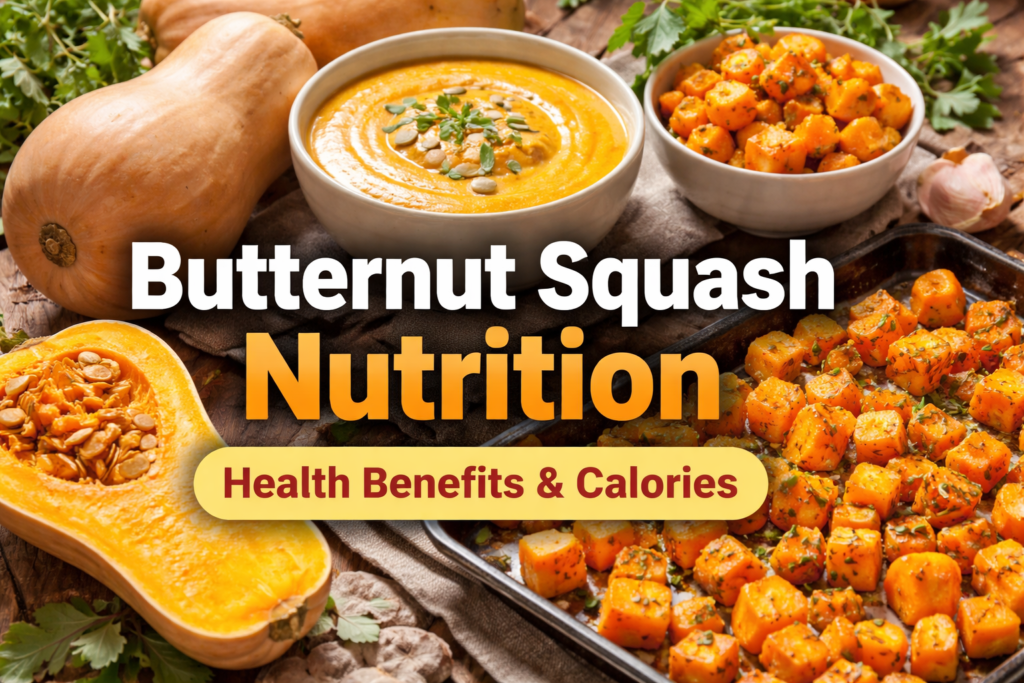
In everyday life, butternut squash works well in simple meals. Busy families often roast a large tray at the start of the week and use it in salads, wraps, or grain bowls. Home cooks enjoy blending it into soups as a creamy base without needing heavy cream. Even picky eaters often accept it because of its mild, slightly sweet taste.
Butternut Squash Nutrition for Different Diets
Vegetarians and vegans benefit from butternut squash as a nutrient-dense carbohydrate source that pairs well with legumes and seeds. For gluten-free diets, it works as a grain alternative in many recipes. People following heart-healthy or calorie-controlled plans also find it easy to include due to its low fat and high fiber content.
FAQs About Butternut Squash Nutrition
Is butternut squash good for weight loss?
Yes, butternut squash supports weight loss because it is low in calories, high in fiber, and naturally filling. It helps reduce hunger while still providing essential nutrients.
Is butternut squash high in sugar?
Butternut squash contains natural sugars, but the amount is moderate and balanced by fiber. This combination helps prevent rapid blood sugar spikes when eaten in normal portions.
Can people with diabetes eat butternut squash?
People with diabetes can enjoy butternut squash in controlled portions, especially when paired with protein or healthy fats. Its fiber content helps slow glucose absorption.
Is butternut squash healthier than potatoes?
Both have benefits, but butternut squash offers more vitamin A and fewer calories. Potatoes provide more potassium and protein, so variety is key.
Is butternut squash good for immunity?
Yes, its high levels of beta-carotene and vitamin C help support immune function and protect the body from infections.
Conclusion
Butternut squash nutrition proves that healthy food can also be comforting and delicious. With its rich supply of vitamins, minerals, fiber, and antioxidants, it supports immunity, digestion, heart health, and weight management in a natural way. Easy to cook and versatile in meals, it fits into nearly every lifestyle and diet. If you want to improve your meals without overcomplicating your routine, start adding butternut squash to your plate and experience the benefits for yourself.