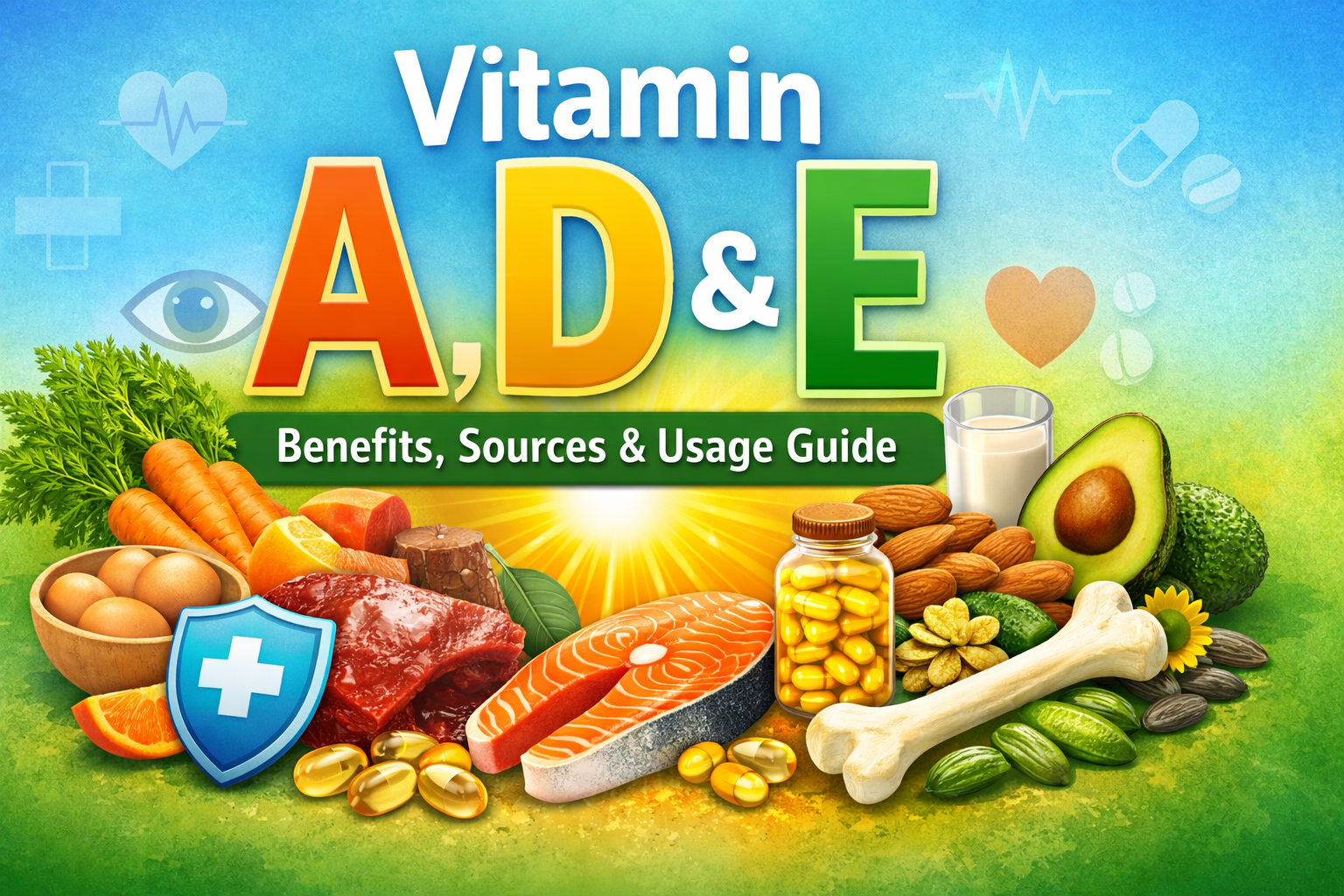
Vitamin AD and E: Benefits, Sources, Deficiency Signs, and How to Use Them Safely
Introduction
Vitamins play a quiet but powerful role in your health. Among the most important are vitamins A, D, and E—three fat-soluble nutrients that support everything from eyesight and immunity to bone strength and skin repair.
Many people hear about these vitamins in ads, supplements, or nutrition labels, yet few understand how they really work, where to get them naturally, or what happens when levels fall too low. Even fewer realize that taking too much can be harmful.
This guide explains Vitamin AD, and E in clear, simple language. You’ll learn their benefits, food sources, deficiency symptoms, real-life examples, and how to use supplements wisely—so you can make confident decisions about your health.
Why Vitamins A, D, and E Matter
Vitamins A, D, and E are fat-soluble, meaning your body stores them in liver and fat tissue rather than flushing them out quickly. That makes them powerful—but also means balance is essential.
Together, these nutrients help:
- Maintain healthy vision and skin
- Support immune defenses
- Strengthen bones and teeth
- Protect cells from damage
- Aid growth and tissue repair
Modern diets, indoor lifestyles, and limited sun exposure make deficiencies more common than many people expect.
Vitamin A: The Vision and Immunity Champion
What Vitamin A Does
Vitamin A supports several vital processes:
- Keeps the surface of your eyes and skin healthy
- Helps you see in low light
- Strengthens immune responses
- Supports normal growth and reproduction
It exists in two main forms. Preformed vitamin A comes from animal foods, while provitamin A carotenoids—such as beta-carotene—come from colorful plants.
Natural Food Sources of Vitamin A
You can meet most needs through diet, including:
- Liver and fish liver oils
- Eggs and dairy products
- Carrots, sweet potatoes, and pumpkin
- Spinach, kale, and other leafy greens
- Mangoes and apricots
Bright orange or dark green vegetables are usually rich in carotenoids.
Signs of Vitamin A Deficiency
Deficiency is still common in some regions and can lead to serious problems:
- Night blindness or trouble seeing in dim light
- Dry eyes and skin
- Frequent infections
- Slow wound healing
In children, severe deficiency can impair growth and increase the risk of illness.
Real-life example: Public health programs that provide vitamin A supplements to young children have significantly reduced blindness and infection-related deaths in several developing countries.
Vitamin D: The Sunshine Vitamin for Bones and Immunity
What Vitamin D Does
Vitamin D helps your body absorb calcium and phosphorus—two minerals essential for strong bones and teeth. It also plays a growing role in immune regulation, muscle function, and mood balance.
Unlike most vitamins, your body can make vitamin D when sunlight hits your skin. However, indoor work, sunscreen use, pollution, and winter seasons often limit production.
Sources of Vitamin D
You can get vitamin D from:
- Sun exposure (about 10–20 minutes for many people, depending on skin tone and location)
- Fatty fish such as salmon, sardines, and mackerel
- Egg yolks
- Fortified milk, cereals, and plant milks
- Supplements when advised by a doctor
Symptoms of Vitamin D Deficiency
Low vitamin D levels may cause:
- Bone pain or weakness
- Muscle aches and cramps
- Fatigue
- Frequent colds or infections
In children, deficiency can lead to rickets, a condition that softens bones. In adults, it increases the risk of osteoporosis and fractures.
Practical insight: Office workers who rarely go outdoors often discover low vitamin D during routine blood tests. Adding short daily walks in sunlight and vitamin-D-rich foods can make a noticeable difference within months.
Vitamin E: The Cellular Protector
What Vitamin E Does
Vitamin E acts mainly as an antioxidant. It helps protect cells from damage caused by free radicals, which are linked to aging and chronic disease. It also supports immune health and skin repair.
Best Dietary Sources of Vitamin E
Common sources include:
- Almonds, sunflower seeds, and peanuts
- Vegetable oils such as sunflower, safflower, and wheat germ oil
- Avocados
- Spinach and broccoli
Because vitamin E is fat-soluble, eating these foods with a little healthy fat helps absorption.
Signs of Vitamin E Deficiency
True deficiency is rare but can occur in people with fat-absorption disorders. Symptoms may include:
- Muscle weakness
- Nerve problems such as tingling or poor coordination
- Vision issues
- Weakened immunity
How Much Do You Need?
Daily needs vary by age, sex, and life stage. General adult guidelines often fall around:
- Vitamin A: 700–900 micrograms
- Vitamin D: 600–800 IU (15–20 micrograms), sometimes more if deficient
- Vitamin E: 15 milligrams
Always check labels and consult a healthcare professional before starting supplements, especially for children, pregnant women, or people with medical conditions.
Can You Take Vitamins A, D, and E Together?
Yes—these vitamins are often combined in multivitamins or fish-oil products. Because they are fat-soluble, taking them with meals that contain healthy fats improves absorption.
However, more is not always better. Excess intake can build up in the body and cause harm:
- Too much vitamin A may lead to headaches, liver issues, or birth defects during pregnancy.
- High doses of vitamin D can raise calcium levels, damaging kidneys and bones.
- Excess vitamin E may interfere with blood clotting in some people.
Moderation and professional guidance are key.
Whole Foods vs. Supplements
For most people, a balanced diet provides enough of these nutrients. Supplements can help when:
- Blood tests show deficiency
- Sun exposure is very limited
- Certain medical conditions affect absorption
- Dietary intake is restricted
Real-life example: Someone following a strict vegan diet might meet vitamin A needs from vegetables but still require vitamin D supplementation during winter months.
Tips to Maintain Healthy Vitamin Levels
Small daily habits make a big difference:
- Include colorful vegetables and leafy greens in meals
- Eat nuts and seeds several times a week
- Enjoy fatty fish or fortified foods
- Spend short, safe periods in sunlight
- Get routine checkups if you feel tired or achy often
FAQs About Vitamins A, D, and E
What happens if I take vitamin AD and E every day?
Taking them daily in recommended amounts is usually safe, especially when they come from food. High-dose supplements should only be used under medical supervision.
Which vitamin is best for immunity?
All three support immune health. Vitamin A helps maintain protective tissues, vitamin D regulates immune responses, and vitamin E protects immune cells from damage.
Can vitamin D deficiency cause weight gain?
Low vitamin D is linked to fatigue and reduced activity, which may indirectly affect weight, but it is not a direct cause of weight gain.
Are these vitamins good for skin?
Yes. Vitamin A supports skin renewal, vitamin D helps repair tissues, and vitamin E protects against oxidative damage that contributes to aging.
Should children take supplements for these vitamins?
Children usually get enough from food and fortified products, but supplementation may be recommended in areas with high deficiency rates or limited sun exposure. Always follow a pediatrician’s advice.
Conclusion: Balance Is the Key to Better Health
Vitamins A, D, and E quietly protect your vision, bones, skin, and immune system every day. By eating a varied diet, getting safe sunlight, and using supplements only when necessary, you can keep these nutrients in healthy balance.
If you often feel tired, experience bone or muscle pain, or struggle with frequent infections, consider speaking with a healthcare professional about checking your vitamin levels. Small changes today—like adding leafy greens, nuts, or a short walk outdoors—can lead to stronger health tomorrow.
Take action now: review your daily meals, step into the sun when you can, and make informed choices that support long-term wellness.