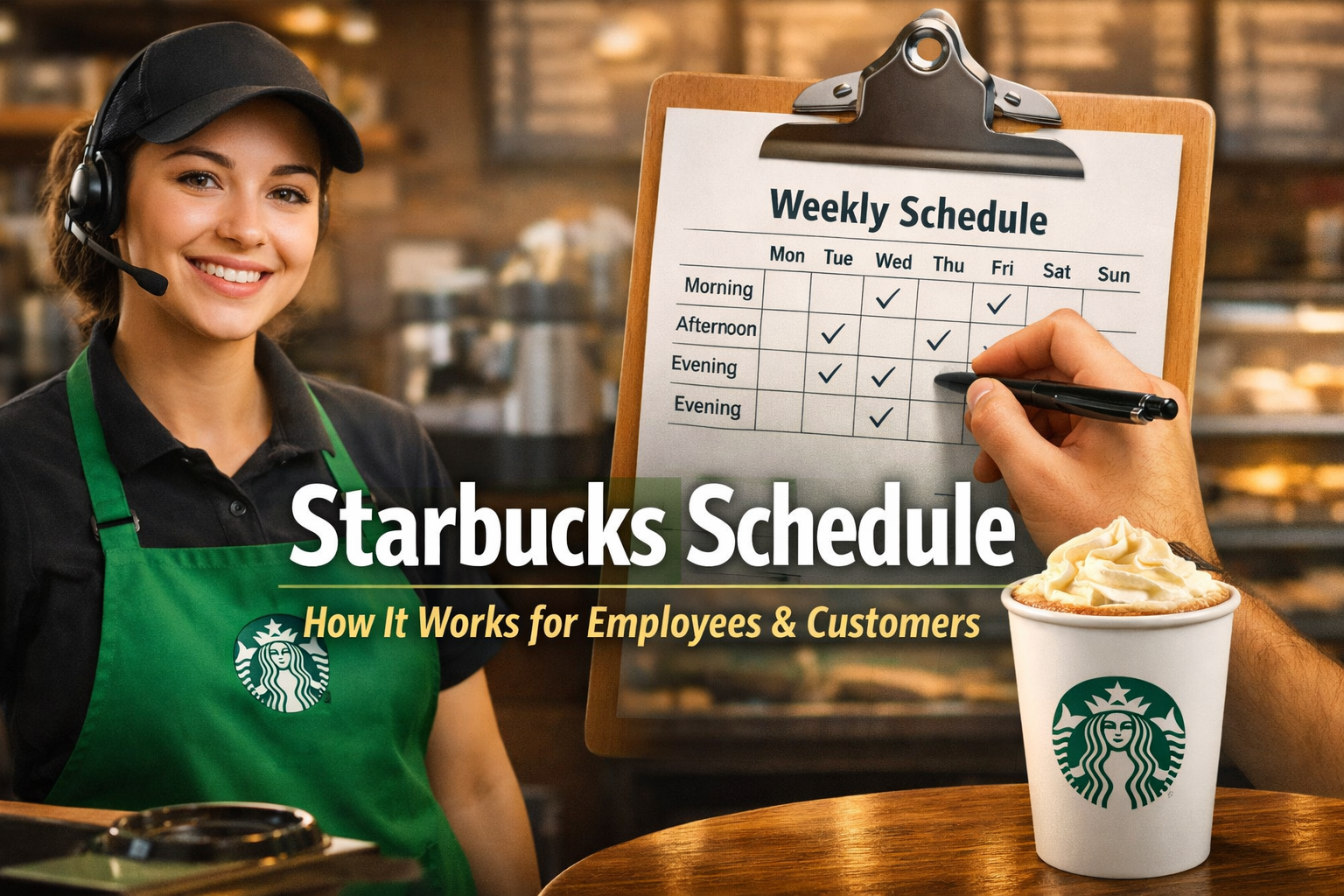
Starbucks Schedule: How It Works for Employees and Customers
Introduction
A well-organized schedule keeps a busy coffee shop running smoothly. At Starbucks, scheduling is more than simply assigning work hours. It is a carefully planned system that ensures customers receive quick service while employees maintain a balanced workload.
Understanding the Starbucks schedule can help both employees and customers. Employees can better manage their work-life balance, while customers can plan their visits during the best hours. From shift planning and store operating hours to the digital tools used for scheduling, this guide explains everything you need to know.
Understanding the Starbucks Schedule System
The Starbucks schedule refers to how work shifts are assigned to employees and how store operating hours are structured. Because Starbucks locations serve thousands of customers daily, scheduling must ensure enough staff members are available at the busiest times.
Managers usually create schedules one to two weeks in advance. This allows employees to plan their personal commitments while giving managers flexibility to adjust shifts based on customer traffic.
A typical Starbucks schedule balances three main priorities: customer demand, employee availability, and store performance. When these factors are aligned, the store runs efficiently and employees experience less stress.
How Starbucks Schedules Work for Employees
Employees at Starbucks are called partners. The company uses a structured scheduling process to assign shifts and maintain fair working conditions.
Most stores rely on digital scheduling systems that allow partners to view their weekly hours, request time off, and swap shifts if needed. This system helps managers maintain transparency while giving employees more control over their schedules.
Partners usually work shifts ranging from four to eight hours depending on their role and availability. Part-time employees may work fewer hours per week, while full-time partners often receive more consistent schedules.
The scheduling system also considers employee preferences. Many partners submit availability forms that specify when they can work, which helps managers create fair and flexible schedules.
Typical Starbucks Shift Structure
A Starbucks store operates through multiple shifts throughout the day. Each shift focuses on different responsibilities depending on the time and customer flow.
Morning shifts usually begin very early because many customers stop by for coffee before work or school. Afternoon shifts often focus on maintaining service during lunch hours, while evening shifts handle closing tasks and preparing the store for the next day.
Morning shifts are often the busiest. Employees handle large volumes of orders, prepare drinks quickly, and maintain customer service standards during the rush.
Afternoon shifts typically focus on steady service. Employees restock ingredients, clean workstations, and assist customers who visit during lunch breaks.
Evening shifts involve both service and closing duties. Employees clean equipment, organize supplies, and ensure the store is ready for the following morning.
Starbucks Store Operating Hours
While scheduling focuses on employees, store operating hours are just as important for customers. Starbucks locations typically open early in the morning and close late in the evening.
Many stores open between 5:00 AM and 6:00 AM to serve early commuters. Closing times often range from 9:00 PM to 11:00 PM depending on the location and demand.
Some stores in busy areas operate even longer hours. Locations inside airports, hospitals, and city centers may run nearly around the clock to serve travelers and night-shift workers.
However, store hours can vary depending on factors such as local regulations, seasonal demand, and staffing availability. Checking the schedule of a specific Starbucks location before visiting is always a good idea.
How Managers Create Starbucks Schedules
Creating an effective Starbucks schedule requires planning and data analysis. Managers look at past sales data to predict busy hours and determine how many employees are needed.
For example, morning rush hours usually require more baristas because drink orders increase significantly. Afternoon periods may need fewer employees but still require enough staff to maintain service speed.
Managers also consider employee availability and labor policies. Fair scheduling practices ensure that partners receive adequate breaks and balanced working hours.
Another important factor is training. New employees may work alongside experienced staff members so they can learn procedures while maintaining service quality.
Digital Tools Used for Starbucks Scheduling
Modern scheduling systems help Starbucks manage thousands of employees across its global network. These digital platforms allow managers and employees to communicate easily about work hours.
Partners can view their schedules online, request shift changes, and track upcoming work hours. This transparency helps reduce confusion and last-minute changes.
Digital scheduling tools also improve efficiency. Managers can quickly adjust shifts during busy seasons or special promotions without disrupting store operations.
Technology plays a major role in maintaining consistency across Starbucks locations, ensuring that each store provides reliable service to customers.
Benefits of the Starbucks Scheduling System
The Starbucks schedule is designed to support both operational efficiency and employee well-being. A well-structured schedule improves productivity, reduces stress, and enhances customer service.
Employees benefit from predictable work hours and clear communication about shifts. This allows them to balance work with school, family responsibilities, or personal goals.
For customers, an effective schedule means faster service and better drink quality. When enough staff members are available during busy periods, customers experience shorter wait times and a smoother ordering process.
In addition, consistent scheduling helps maintain the friendly atmosphere that Starbucks is known for. Employees who feel supported in their schedules are more likely to provide positive customer experiences.
Tips for Managing a Starbucks Work Schedule
Working in a fast-paced coffee shop can be rewarding, but it requires good time management. Employees who understand their schedule and prepare for shifts can perform better and feel less overwhelmed.
Planning ahead is one of the most effective strategies. Checking the weekly schedule early helps employees organize their personal commitments around work hours.
Communicating with managers is also essential. If scheduling conflicts arise, informing a manager early allows time to find a replacement or adjust shifts.
Building good relationships with coworkers can also help. Many partners swap shifts when necessary, which creates a supportive team environment.
Finally, maintaining a healthy routine outside work is important. Adequate rest, proper meals, and regular breaks help employees stay energized during busy shifts.
Real-Life Example of a Starbucks Schedule
To understand how scheduling works in practice, imagine a typical weekday at a busy Starbucks location.
The store opens at 5:30 AM, and the morning team arrives earlier to prepare the equipment and ingredients. During the morning rush between 6:00 AM and 9:00 AM, multiple baristas handle drink orders while another employee manages the register.
Around midday, the store transitions to the afternoon shift. Customer traffic slows slightly, allowing employees to restock supplies and clean work areas.
In the evening, a smaller team handles remaining customers and prepares the store for closing. By the time the store closes at 10:00 PM, the team has completed cleaning tasks and organized the workspace for the next day.
This example shows how scheduling adapts to customer demand while ensuring smooth operations throughout the day.
Why the Starbucks Schedule Matters
The Starbucks schedule plays a major role in the company’s success. Efficient scheduling ensures that stores remain fully staffed during busy periods while avoiding unnecessary labor costs during quieter hours.
A well-planned schedule also contributes to employee satisfaction. When workers feel that their time and availability are respected, they are more motivated and engaged.
For customers, the benefits are clear. A properly scheduled team can serve drinks faster, maintain cleanliness, and deliver the welcoming experience that people expect when visiting Starbucks.
Conclusion
The Starbucks schedule is a carefully designed system that balances customer demand, employee availability, and operational efficiency. From early morning shifts to evening closing routines, every schedule plays a role in keeping the coffee shop running smoothly.
Understanding how scheduling works can help employees manage their work-life balance and give customers insight into how their favorite coffee shop operates.
If you are considering working at Starbucks or simply want to understand how large coffee chains operate, learning about scheduling practices provides valuable insight into the daily operations behind the scenes.
Take a moment to observe your local Starbucks during different times of the day. You may notice how carefully organized shifts help deliver the fast, friendly service customers enjoy every day.
FAQs
What is the Starbucks schedule app for employees?
Starbucks employees often use digital scheduling tools provided by the company to view work hours, request time off, and manage shift swaps.
How far in advance are Starbucks schedules posted?
Most Starbucks managers post schedules about one to two weeks in advance so employees have time to plan their commitments.
How many hours do Starbucks employees usually work?
Part-time employees typically work between 20 and 30 hours per week, while full-time partners may work closer to 40 hours depending on store needs.
Do Starbucks employees have flexible schedules?
Yes, Starbucks often offers flexible scheduling. Employees can submit availability preferences and sometimes swap shifts with coworkers.
What are the busiest Starbucks hours?
The busiest hours are usually early mornings, especially between 6:00 AM and 9:00 AM, when customers stop by for coffee before work or school.