
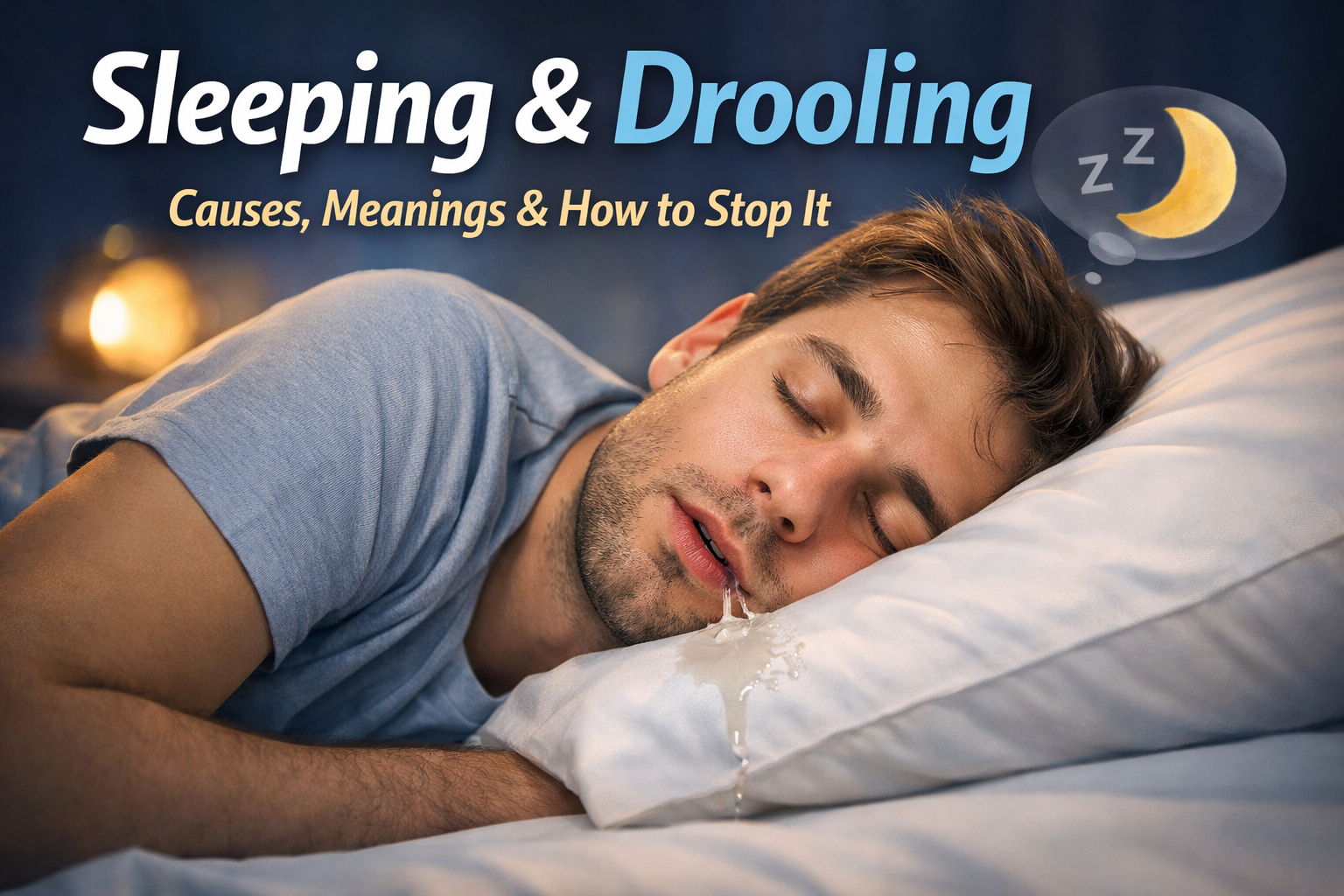
Sleeping and Drooling: Causes, Meanings, and Simple Ways to Stop It
Introduction
You wake up and notice your pillow is wet. Embarrassing? Maybe. Common? Absolutely. Sleeping and drooling is something most people experience at least once, yet very few understand why it happens or whether it signals a health issue.
For some, it’s an occasional inconvenience. For others, it happens almost every night and affects sleep quality, confidence, and comfort. The good news is that drooling during sleep is usually harmless—and often fixable once you understand the cause.
This guide explains why drooling happens when you sleep, what it may say about your body, and how to reduce or stop it naturally.
What Is Drooling During Sleep?
Drooling during sleep occurs when saliva escapes from the mouth while you’re asleep. Medically, excessive saliva production is known as hypersalivation, but nighttime drooling is usually caused by relaxed facial muscles rather than too much saliva.
During deep sleep stages, the body relaxes completely. If the mouth stays open or swallowing slows down, saliva can leak out instead of being swallowed.
Occasional drooling is normal. Persistent or heavy drooling may point to underlying habits or health conditions.
Why Do People Drool While Sleeping?
1. Sleeping Position
Your sleep posture plays a major role.
- Side sleeping or stomach sleeping makes it easier for saliva to escape due to gravity.
- Back sleeping helps saliva flow toward the throat, reducing drooling.
People who naturally turn onto their side are more likely to drool at night.
2. Mouth Breathing
Breathing through the mouth instead of the nose increases drooling. When the mouth stays open, saliva has an easy exit path.
Common reasons for mouth breathing include:
- Nasal congestion
- Allergies
- Deviated septum
- Chronic sinus issues
3. Deep Sleep Cycles
During deep sleep, swallowing reflexes slow down. Saliva continues to form, but the body doesn’t clear it as efficiently, leading to drooling.
People who sleep very deeply or are sleep-deprived may drool more often.
4. Excess Saliva Production
Certain foods and habits stimulate saliva production, especially before bedtime.
Examples include:
- Acidic or spicy meals
- Sugary snacks
- Alcohol consumption
- Smoking or vaping
5. Dental or Oral Issues
Poor oral health can increase saliva flow as the body tries to protect the mouth.
Possible contributors:
- Gum infections
- Tooth decay
- Ill-fitting dental appliances
- Teething (in children)
Is Sleeping and Drooling a Sign of Good Sleep?
There’s a popular belief that drooling means you slept deeply and sometimes that’s true.
Drooling can happen during:
- REM sleep
- Slow-wave (deep) sleep
However, drooling alone doesn’t guarantee quality sleep. Someone can drool and still wake up tired if other sleep disruptions exist, such as sleep apnea or nasal blockage.
So while drooling may suggest relaxation, it’s not a reliable measure of healthy sleep.
When Should You Be Concerned About Drooling?
Occasional drooling is harmless. You should consider medical advice if drooling is:
- Sudden and severe
- Paired with difficulty swallowing
- Accompanied by slurred speech
- Occurring alongside facial weakness
- Happening during the day as well as night
In rare cases, persistent drooling may be linked to neurological conditions, reflux disorders, or infections.
Common Health Conditions Linked to Nighttime Drooling
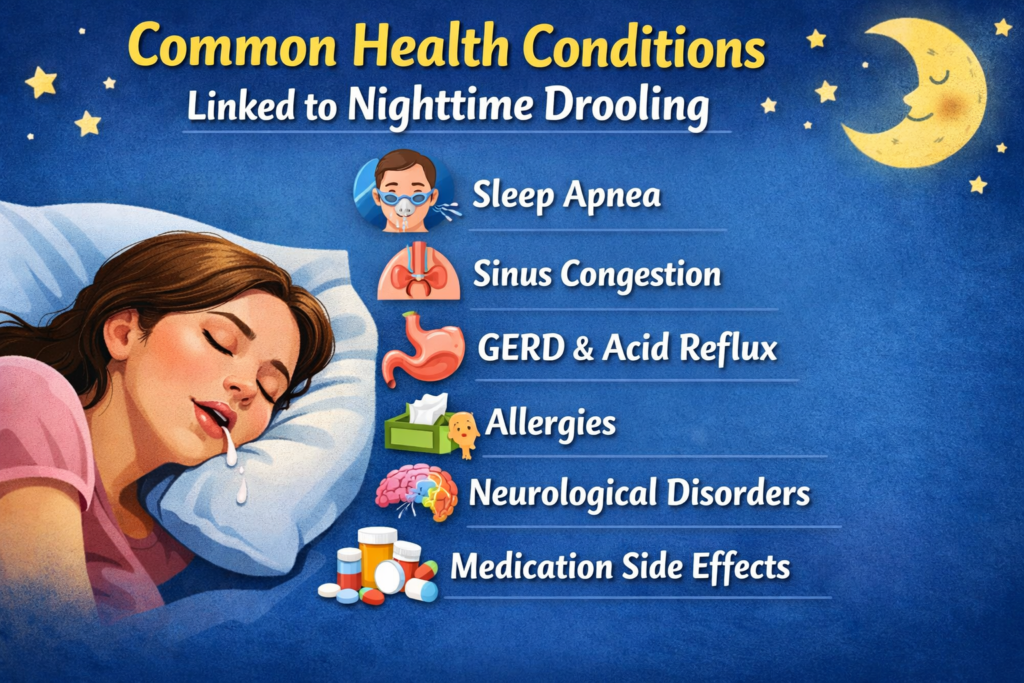
Acid Reflux (GERD)
Stomach acid can stimulate saliva production as a protective response. People with nighttime reflux often drool more, especially when lying flat.
Sleep Apnea
Obstructed breathing can force mouth breathing and drooling. Snoring, gasping, and daytime fatigue are common warning signs.
Allergies and Sinus Problems
Blocked nasal passages push airflow through the mouth, increasing drooling risk during sleep.
Medications
Some medications increase saliva production, including:
- Antipsychotics
- Certain antibiotics
- Alzheimer’s medications
- Anti-seizure drugs
How to Stop Drooling While Sleeping
Change Your Sleeping Position
Training yourself to sleep on your back can significantly reduce drooling. Using a supportive pillow or body positioning aids can help prevent rolling onto your side.
Improve Nasal Breathing
Keeping nasal passages clear reduces mouth breathing.
Helpful strategies:
- Use saline sprays
- Treat allergies
- Try a humidifier
- Take warm showers before bed
Elevate Your Head
Slight elevation helps saliva flow naturally down the throat. A thicker pillow or adjustable bed may help.
Practice Better Oral Hygiene
Healthy gums and teeth reduce excessive saliva production. Brush, floss, and visit your dentist regularly.
Watch Your Evening Diet
Avoid foods that increase saliva before bedtime:
- Spicy meals
- Citrus fruits
- Sugary desserts
- Alcohol
Strengthen Facial Muscles
Simple mouth and jaw exercises may improve lip closure during sleep over time.
Drooling in Children vs. Adults
Children
Drooling is common in infants and toddlers due to:
- Teething
- Developing swallowing control
- Mouth breathing during sleep
Most children outgrow drooling naturally.
Adults
In adults, drooling is more likely linked to sleep habits, breathing issues, or medical conditions. Persistent adult drooling should not be ignored if it affects daily life.
Emotional and Social Impact of Drooling
While medically minor, drooling can affect confidence and relationships. People may feel embarrassed sharing a bed or traveling with others.
It’s important to remember:
- Drooling is extremely common
- It does not reflect hygiene or maturity
- Small adjustments often solve the issue
Normalizing the conversation helps reduce unnecessary shame.
Real-Life Example
A 34-year-old office worker reported drooling nightly and waking up exhausted. After evaluation, the issue was mouth breathing caused by untreated allergies. Once allergy treatment began and sleep posture changed, drooling reduced within two weeks and sleep quality improved noticeably.
This shows how addressing the root cause often leads to quick improvement.
Conclusion: Should You Worry About Sleeping and Drooling?
Sleeping and drooling is usually harmless and incredibly common. For most people, it’s a sign of relaxed sleep or simple habits like side sleeping or mouth breathing.
If drooling happens occasionally, there’s no cause for concern. If it’s frequent or disruptive, small lifestyle changes can make a big difference.
Pay attention to your sleep position, breathing patterns, and overall health. If drooling persists despite adjustments, seeking professional advice can provide clarity and peace of mind.
Take control of your sleep comfort tonight, small changes can lead to drier pillows and better rest.
Frequently Asked Questions (FAQs)
Is drooling while sleeping normal?
Yes, occasional drooling during sleep is completely normal and affects many people, especially side sleepers.
Does drooling mean deep sleep?
It can occur during deep sleep stages, but drooling alone doesn’t guarantee high-quality sleep.
Can stress cause drooling during sleep?
Stress can disrupt breathing patterns and sleep posture, indirectly increasing drooling in some people.
Why do I drool more when sleeping on my side?
Gravity allows saliva to escape more easily when lying on your side or stomach.
Can dehydration cause drooling?
Dehydration usually reduces saliva, but mouth breathing from dryness may still contribute to drooling.
Should I see a doctor for drooling at night?
Consult a professional if drooling is severe, sudden, or paired with other symptoms like swallowing difficulty or speech changes.
Can changing pillows help stop drooling?
Yes, a supportive pillow that promotes back sleeping or elevates the head can reduce drooling.
Does aging increase drooling?
Aging itself doesn’t cause drooling, but age-related muscle relaxation or medications may contribute.



One thought on “Sleeping and Drooling: Causes, Meanings, and Simple Ways to Stop It”