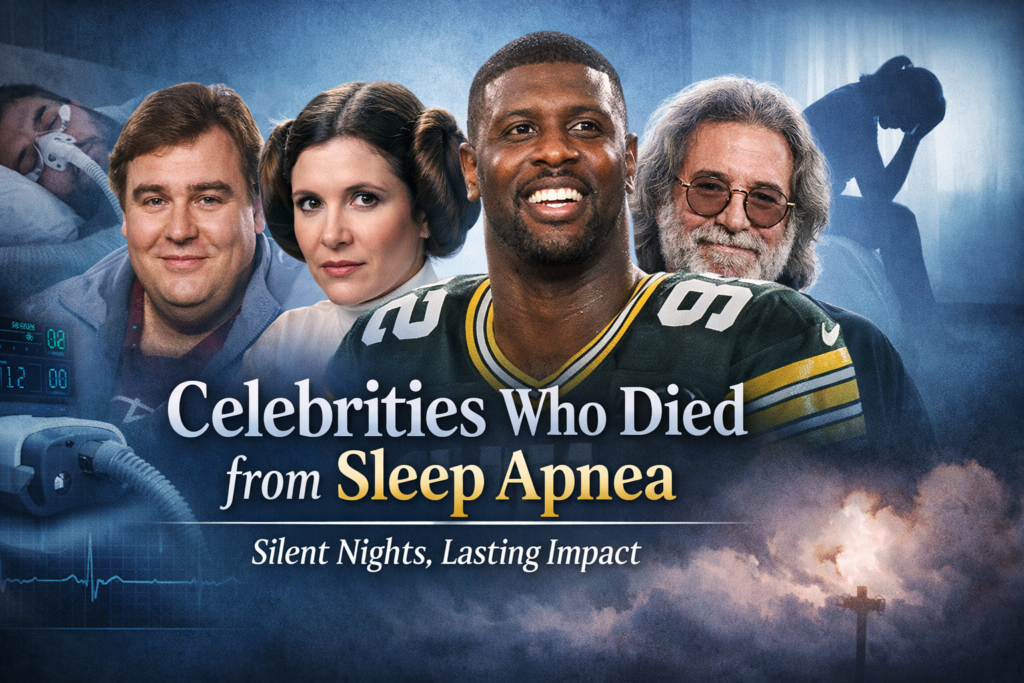
Silent Nights, Lasting Impact: Celebrities Who Died from Sleep Apnea and What We Can Learn
Sleep should restore the body. For millions of people, it quietly does the opposite. Sleep apnea is a serious condition that interrupts breathing during sleep, strains the heart, and increases the risk of sudden death. What makes it more alarming is how often it goes unnoticed, even among people with wealth, access to doctors, and public visibility.
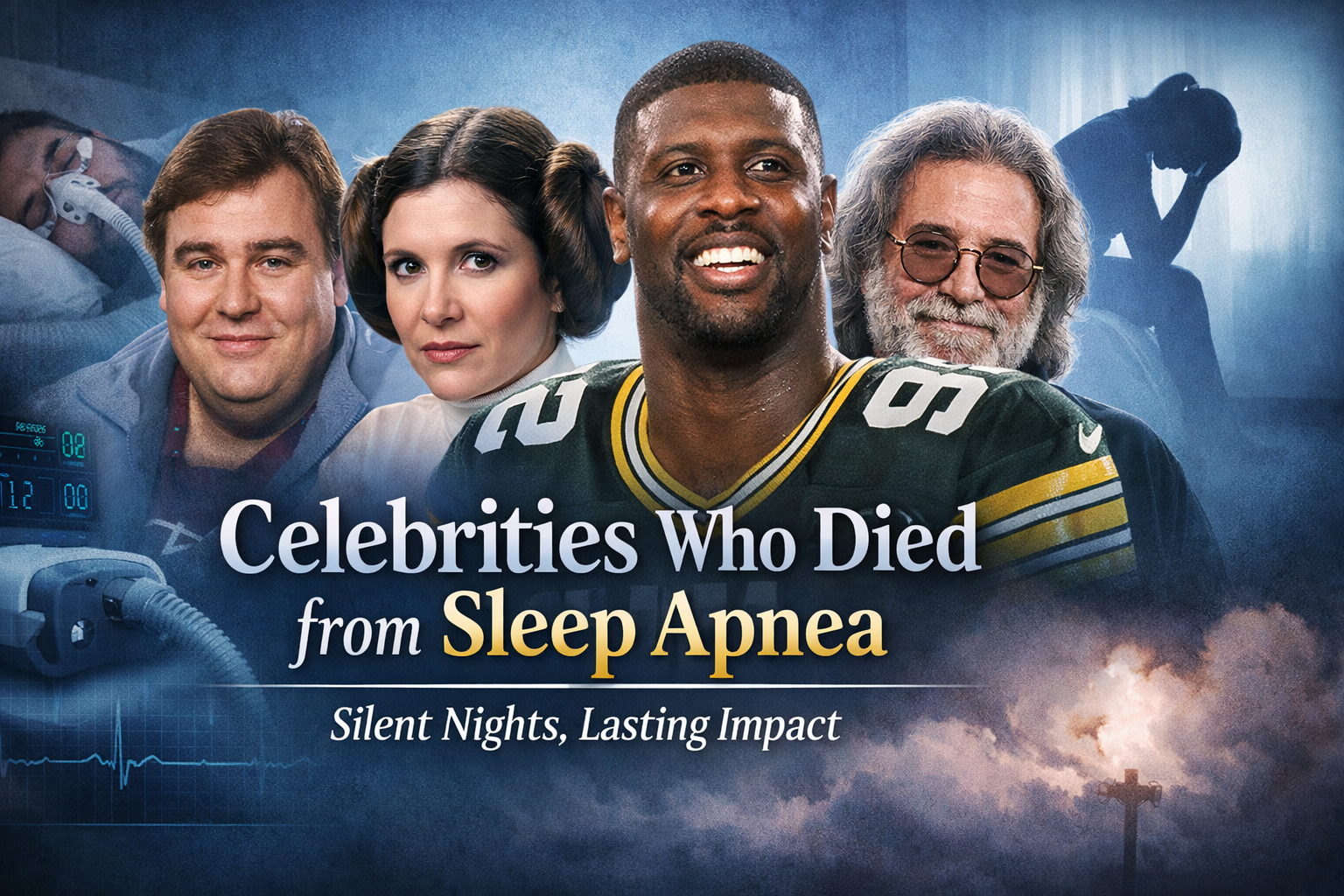
Several well-known celebrities either died directly from sleep apnea or suffered fatal complications strongly linked to untreated sleep apnea. Their stories reveal how dangerous this condition can be and why ignoring symptoms can have tragic consequences.
This article explores celebrities whose deaths were connected to sleep apnea, explains how the disorder becomes life-threatening, and shows what everyday people can do to protect themselves.
Understanding Sleep Apnea and Why It Turns Deadly
Sleep apnea is a sleep-related breathing disorder where airflow repeatedly stops and starts during sleep. The most common form, obstructive sleep apnea, occurs when throat muscles collapse and block the airway. Each pause in breathing can last seconds or even minutes and may happen dozens of times per hour.
Over time, these repeated oxygen drops place extreme stress on the body. Blood pressure rises. The heart works harder. The brain receives less oxygen. This combination increases the risk of heart attacks, strokes, irregular heart rhythms, and sudden death during sleep.
Many people dismiss loud snoring, daytime fatigue, or morning headaches as harmless. In reality, untreated sleep apnea can quietly shorten life.
Reggie White: A Sudden Loss in His Sleep
Reggie White, one of the most dominant defensive players in NFL history, died in 2004 at just 43 years old. His death shocked fans because he appeared strong and healthy even after retirement.
An autopsy revealed that Reggie White suffered from severe sleep apnea. While the official cause of death was cardiac arrhythmia, medical experts concluded that sleep apnea was a major contributing factor. The repeated oxygen deprivation likely triggered a fatal heart rhythm disturbance during sleep.
His case became one of the most cited examples used by doctors to highlight how sleep apnea can lead to sudden nighttime death, even in physically fit individuals.
Carrie Fisher: Sleep Apnea Among Multiple Health Struggles
Carrie Fisher, beloved worldwide for her role as Princess Leia, passed away in 2016 after suffering cardiac arrest. Later reports revealed that she had sleep apnea along with other chronic conditions.
Medical examiners listed sleep apnea as a contributing factor in her death. Chronic breathing interruptions during sleep can significantly increase the risk of heart rhythm disturbances, especially when combined with other health issues.
Her case highlighted how sleep apnea often exists alongside other conditions and quietly worsens them until the body can no longer cope.
John Candy: A Comic Legend and an Overlooked Risk
John Candy died suddenly in 1994 at the age of 43 while filming a movie in Mexico. The official cause was a heart attack.
Although sleep apnea was not widely discussed at the time, later medical commentary and family statements suggested that untreated sleep apnea, combined with obesity and cardiovascular strain, likely contributed to his sudden death.
His story reflects how sleep apnea was poorly understood decades ago and how many lives may have been lost before awareness improved.
Jerry Garcia: When Sleep Disorders Combine with Heart Disease
Jerry Garcia, lead guitarist of the Grateful Dead, died in 1995 from a heart attack. He had multiple health problems, including diabetes and heart disease, and he also suffered from sleep apnea.
Doctors later noted that untreated sleep apnea likely added dangerous strain to his cardiovascular system. Nightly oxygen deprivation can accelerate heart disease and increase the likelihood of fatal cardiac events.
Garcia’s death demonstrates how sleep apnea often acts as a silent amplifier of existing medical conditions.
Why Sleep Apnea Often Goes Untreated, Even for Celebrities
Despite access to top medical care, many celebrities delayed or avoided treatment. Common reasons include discomfort with CPAP machines, denial of symptoms, busy schedules, and underestimating the seriousness of snoring.
Sleep apnea is also underdiagnosed because it happens during sleep. Many people are unaware they stop breathing unless someone else notices.
For public figures constantly traveling, filming, or touring, consistent sleep routines and medical follow-ups can easily fall apart.
Warning Signs That Should Never Be Ignored
Sleep apnea rarely appears without clues. Persistent loud snoring, choking or gasping during sleep, extreme daytime fatigue, memory problems, mood changes, and morning headaches are all red flags.
If untreated, these symptoms can quietly progress into high blood pressure, diabetes, heart disease, and stroke.
The celebrities mentioned above shared a common pattern. Their sleep apnea was either undiagnosed, untreated, or not taken seriously until it was too late.
How Sleep Apnea Leads to Death
Sleep apnea increases mortality risk through repeated oxygen deprivation. Each breathing pause activates stress hormones, raises heart rate, and spikes blood pressure. Over years, this cycle damages blood vessels and the heart.
Fatal outcomes linked to sleep apnea include sudden cardiac arrest during sleep, fatal heart rhythm disturbances, strokes caused by blood pressure surges, and worsening heart failure.
Medical studies consistently show that people with severe untreated sleep apnea have significantly higher death rates than those receiving treatment.
Treatment Saves Lives
The most effective treatment for obstructive sleep apnea is CPAP therapy, which keeps the airway open during sleep. Other options include oral appliances, weight loss, positional therapy, and surgery in specific cases.
People who consistently treat sleep apnea often report better energy, clearer thinking, improved mood, and reduced cardiovascular risk.
The tragedy is not that sleep apnea exists, but that it is highly treatable when taken seriously.
FAQs About Celebrities and Sleep Apnea Deaths
Did sleep apnea directly cause these celebrity deaths?
In most cases, sleep apnea was listed as a contributing factor rather than the sole cause. However, medical evidence shows it significantly increases the risk of fatal heart events during sleep.
Can healthy-looking people die from sleep apnea?
Yes. Even athletes and active individuals can have sleep apnea. Physical fitness does not guarantee a clear airway during sleep.
Is snoring always a sign of sleep apnea?
Not always, but loud, chronic snoring combined with daytime fatigue or breathing pauses is a strong warning sign that should be evaluated.
Can sleep apnea really be fatal if untreated?
Yes. Severe untreated sleep apnea dramatically increases the risk of heart attack, stroke, and sudden death during sleep.
How can someone know if they have sleep apnea?
A sleep study is the most reliable way to diagnose sleep apnea. Home sleep tests and in-lab studies can both provide accurate results.
Final Thoughts: Learn from Lives Lost Too Soon
The deaths of Reggie White, Carrie Fisher, John Candy, and Jerry Garcia reveal a sobering truth. Sleep apnea does not care about fame, success, or talent. It operates silently and relentlessly when ignored.
The good news is that awareness saves lives. Modern diagnosis is accessible, treatment is effective, and quality of life often improves dramatically after therapy begins.
If you or someone you love snores loudly, wakes up exhausted, or struggles with unexplained fatigue, do not dismiss it. Take sleep seriously. Get evaluated. One simple test could prevent a tragedy and add years of healthy life.