Predator Nutrition for Humans: Science, Benefits, Risks, and How to Do It Right
High-protein, meat-focused eating plans are rising fast. Some call this style of fueling the body predator nutrition—a way of eating that emphasizes animal-based foods to support strength, fat loss, focus, and metabolic health.
But what does predator nutrition really mean for humans? Is it healthy long term? And how can you apply its principles without harming your body?
This in-depth guide explores the science behind protein-heavy diets, real-world examples, practical tips, and common questions people ask before trying this approach.
What Is Predator Nutrition in Human Diets?
In human nutrition, predator eating does not mean acting like wild animals. It refers to a dietary pattern centered on:
- High-quality animal protein
- Healthy animal fats
- Minimal processed carbohydrates
- Whole, nutrient-dense foods
It overlaps with popular approaches such as carnivore-leaning diets, paleo-style eating, and high-protein low-carb plans used by athletes and fitness enthusiasts.
The goal is to fuel the body with foods that are dense in amino acids, iron, zinc, vitamin B12, and essential fats—nutrients strongly linked to muscle building, hormone balance, and energy.
Why Protein-Focused Diets Are Gaining Attention
Modern research continues to highlight protein’s role in health. According to nutrition studies published in major medical journals, higher protein intake can:
- Increase satiety and reduce hunger
- Preserve lean muscle during weight loss
- Improve blood sugar control
- Support recovery after exercise
Many people adopt predator-style nutrition because it helps them simplify eating and avoid ultra-processed foods that dominate modern diets.
Real-life examples include:
- Strength athletes using steak, eggs, and fish to rebuild muscle.
- Busy professionals relying on protein-rich meals to stay full and focused.
- People with insulin resistance reducing refined carbs while increasing protein intake.
The Science Behind Predator-Style Eating
Protein and Muscle Maintenance
Protein provides amino acids—the building blocks of muscle tissue. As people age, their bodies become less efficient at using protein, making higher-quality sources even more important.
Research suggests adults benefit from spreading protein intake across meals rather than loading it all at dinner.
Fats as a Stable Energy Source
Animal fats contain saturated and monounsaturated fatty acids that help:
- Support hormone production
- Absorb fat-soluble vitamins
- Provide steady energy
When carbohydrates drop, the body often shifts toward burning fat and ketones for fuel, which some people report improves mental clarity.
Micronutrient Density
Foods common in predator nutrition—such as liver, shellfish, red meat, and eggs—are among the most nutrient-dense items available. They deliver iron, selenium, choline, and vitamin A in highly absorbable forms.
Potential Benefits of Predator Nutrition for Humans
People who follow this style of eating often report:
- Better appetite control
- Faster fat loss
- Increased strength and stamina
- Reduced cravings for sugary foods
- Simpler meal planning
Some clinical trials on low-carbohydrate, high-protein diets show improvements in triglyceride levels and markers of metabolic health when ultra-processed foods are removed.
Possible Risks and Who Should Be Careful
Predator nutrition is not automatically perfect for everyone. Risks may include:
- Fiber deficiency if plant foods disappear entirely
- Elevated cholesterol in sensitive individuals
- Digestive discomfort during adaptation
- Micronutrient imbalances if food choices lack variety
People with kidney disease, gout, or cardiovascular conditions should speak with a healthcare professional before drastically increasing protein or saturated fat intake.
Balance and food quality matter far more than extremes.
How to Follow Predator Nutrition in a Healthy Way
You do not need to eat only meat to benefit from predator-style principles. A smart version focuses on quality, variety, and sustainability.
Prioritize High-Quality Protein Sources
Choose:
- Grass-fed or pasture-raised beef
- Free-range eggs
- Wild-caught fish
- Lamb, turkey, and chicken
- Organ meats in small amounts
Include Strategic Plant Foods
Although animal foods dominate, adding small amounts of:
- Leafy greens
- Fermented vegetables
- Berries
- Avocado
can improve digestion and micronutrient intake.
Stay Hydrated and Mind Electrolytes
Low-carb, high-protein eating increases water and mineral loss early on. Drinking enough fluids and consuming sodium, potassium, and magnesium can prevent fatigue and headaches.
Example Day of Predator-Style Eating
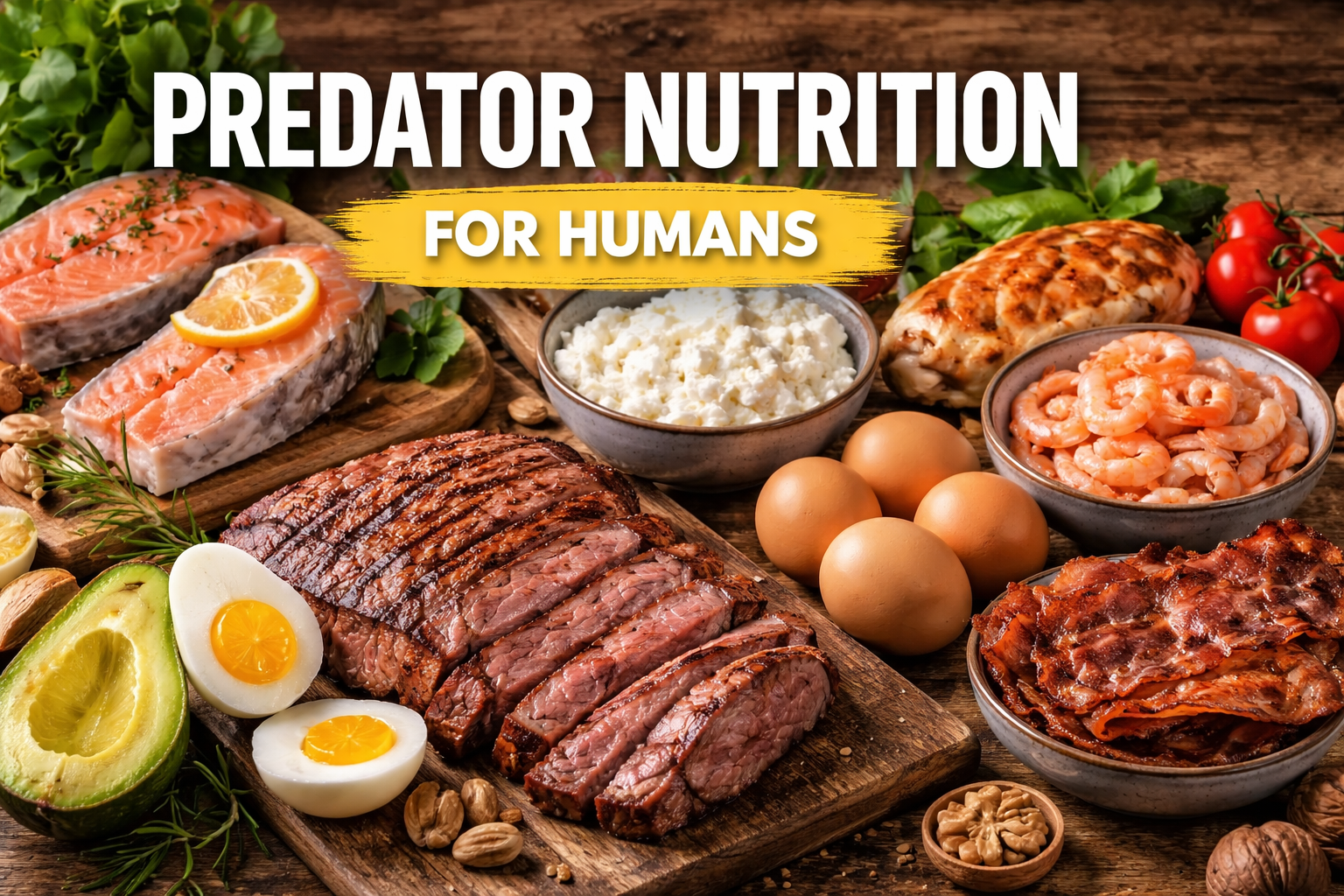
- Breakfast: Eggs cooked in butter with smoked salmon
- Lunch: Grilled steak with olive-oil-dressed greens
- Snack: Greek yogurt or beef jerky
- Dinner: Roast chicken thighs with bone broth
This keeps protein high while avoiding ultra-processed foods.
Predator Nutrition and Athletic Performance
Many strength athletes rely on meat-heavy diets to recover faster and maintain lean mass. Studies on resistance training consistently show that adequate protein intake supports:
- Muscle hypertrophy
- Strength gains
- Reduced soreness
Endurance athletes may still need more carbohydrates, but even they often increase protein during heavy training blocks.
Sustainability and Ethical Considerations
Modern predator-style eating increasingly focuses on responsible sourcing:
- Supporting regenerative farming
- Choosing nose-to-tail consumption
- Reducing food waste
- Buying locally when possible
These practices lower environmental impact while improving food quality.
Conclusion: Is Predator Nutrition Right for You?
Predator nutrition for humans centers on protein-rich, whole foods that support strength, satiety, and metabolic health. When done thoughtfully—with variety, hydration, and attention to individual needs—it can be a powerful tool for improving diet quality.
Before making major changes, evaluate how your body responds and consider professional guidance if you have health conditions.
Ready to upgrade your nutrition? Start by replacing processed meals with high-quality protein foods this week and observe how your energy, focus, and appetite change.
Frequently Asked Questions
What does predator nutrition mean in human diets?
It refers to eating patterns that emphasize animal-based protein and fats while limiting processed carbohydrates and sugary foods.
Is predator nutrition the same as the carnivore diet?
Not exactly. Predator nutrition often includes mostly animal foods but may allow small amounts of plant foods for balance and digestion.
Can predator nutrition help with weight loss?
Many people lose weight because high-protein meals increase fullness and reduce calorie intake naturally, though results vary by individual.
Is eating this way safe long term?
It can be safe when done with variety and quality foods, but medical guidance is advised for people with chronic conditions.
Do I need supplements on predator nutrition?
Some people supplement electrolytes or fiber depending on food choices, but whole foods should remain the foundation.
How much protein should I eat?
General recommendations range from 1.2 to 2.2 grams per kilogram of body weight for active adults, though needs vary.