
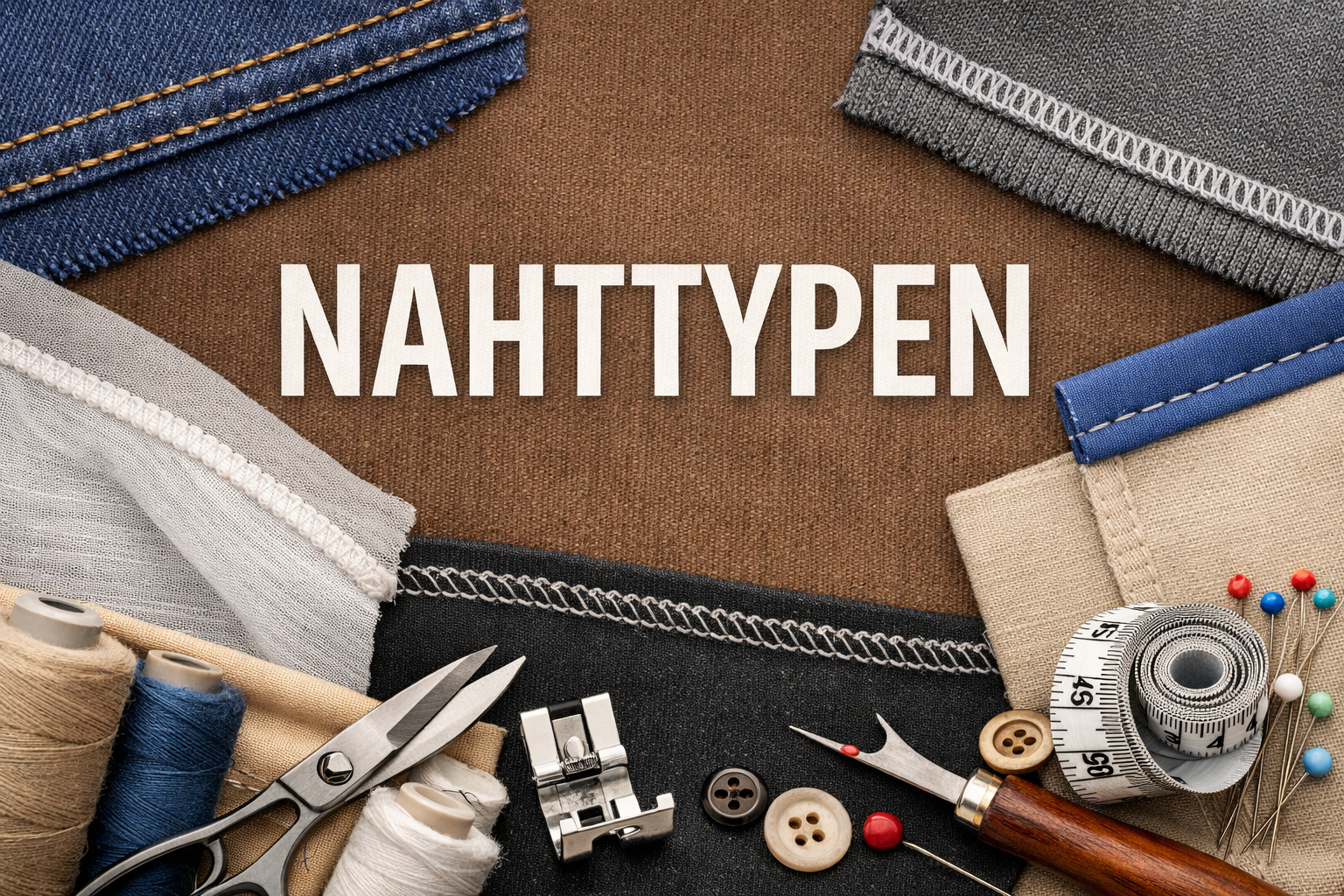
Nahttypen Explained: A Complete Guide to Seam Types in Sewing and Garment Construction
Seams are the hidden architecture of every garment. While fabric defines style, it is the seam that defines strength, shape, and longevity. In German, the term Nahttypen refers to different types of seams used in textile and garment construction. Whether you are a beginner learning basic stitching or a professional working in apparel manufacturing, understanding seam types is essential for producing durable, comfortable, and visually refined clothing.
In this guide, you will learn about the most important Nahttypen, their practical applications, advantages, and when to use each one. The goal is simple: help you choose the right seam for the right purpose and improve the quality of your sewing projects.
What Are Nahttypen?
Nahttypen are classifications of seams used to join two or more pieces of fabric. In fashion design, tailoring, upholstery, and industrial textile production, seam selection affects not only aesthetics but also performance.
A seam does more than connect fabric pieces. It controls stretch, prevents fraying, supports load-bearing areas, and enhances comfort. For example, sportswear requires flexible seams, while denim jackets demand reinforced and durable seam construction.
Professional garment factories often follow standardized seam classifications defined by international textile standards. These systems categorize seams based on structure, function, and finishing technique.
Why Seam Types Matter in Garment Construction
Choosing the correct Nahttyp influences:
- Garment durability and strength
- Wearing comfort
- Fabric behavior during movement
- Production cost and efficiency
- Overall appearance and finish
For instance, a poorly selected seam in a high-stress area such as the shoulder or inseam can lead to tearing after minimal use. On the other hand, a well-constructed flat seam in sportswear prevents skin irritation during movement.
Seam engineering is not just about sewing. It is about understanding fabric properties, tension distribution, and end-use requirements.
Plain Seam (Einfache Naht)
The plain seam is the most basic and widely used seam type. It joins two fabric pieces with right sides together and is typically secured with a straight stitch.
This seam is commonly found in everyday clothing such as shirts, skirts, and lightweight trousers. It is easy to construct and works well with woven fabrics.
However, the raw edges may fray if left unfinished. To improve durability, manufacturers often add seam finishing techniques such as zigzag stitching or overlocking.
Plain seams are ideal for:
- Lightweight fabrics
- Simple garment construction
- Beginner sewing projects
Despite its simplicity, this seam forms the foundation of garment construction worldwide.
French Seam (Französische Naht)
The French seam encloses raw edges inside a clean finish, making it both durable and visually refined. It is often used for delicate or sheer fabrics such as chiffon and silk.
Unlike the plain seam, the French seam involves stitching the fabric twice. The first seam joins the wrong sides together. The second seam encloses the raw edge inside.
This seam type offers several benefits. It prevents fraying, improves comfort, and gives garments a premium interior finish. High-end fashion brands frequently use this seam for luxury garments.
French seams are best suited for:
- Lightweight and transparent fabrics
- Lingerie and blouses
- High-quality couture pieces
Because it adds bulk, it may not be suitable for thick materials.
Flat-Felled Seam (Kappnaht)
The flat-felled seam is strong and highly durable. It is commonly used in jeans, workwear, and sports apparel.
This seam folds one seam allowance over the other and stitches it flat against the fabric. The result is a double-stitched seam with no exposed raw edges.
Denim jeans are a classic example. The inseams and outer seams often use flat-felled construction to withstand stress and repeated washing.
Advantages of flat-felled seams include:
- High tensile strength
- Clean interior finish
- Resistance to fraying
Because it requires precise folding and stitching, it is slightly more complex than basic seams. However, for heavy-duty garments, it is one of the best options available.
Lapped Seam (Überlappungsnaht)
A lapped seam overlaps one fabric piece over another before stitching. It is commonly used in leather garments, waterproof clothing, and industrial textiles.
Unlike other seams, this type does not require seam allowances to be hidden. It is often topstitched for decorative effect.
In raincoats or outdoor gear, lapped seams may be sealed with tape to prevent water penetration. This makes them ideal for weather-resistant applications.
Bound Seam (Eingefasste Naht)
A bound seam finishes raw edges with bias binding or fabric strips. This method is frequently seen in unlined jackets and garments where the interior is visible.
Bound seams provide:
- A clean professional finish
- Reduced fraying
- Decorative appeal
Although it increases production time, it enhances perceived quality. Many high-end tailors use bound seams to showcase craftsmanship.
Overlocked Seam (Overlocknaht)
The overlocked seam uses a serger machine to trim and encase raw edges simultaneously. It is standard in mass garment production due to speed and efficiency.
This seam is flexible and works well with knit fabrics. T-shirts and activewear commonly feature overlocked seams.
Because of its elasticity, it allows fabric to stretch without breaking threads. For modern clothing manufacturing, overlocking remains essential.
Flat Seam (Flachnaht)
Flat seams are especially common in sportswear and performance clothing. They lie completely flat against the skin, reducing friction.
Athletic brands often use flatlock stitching to prevent chafing during physical activity. For example, running shirts and yoga leggings rely on this seam type to maximize comfort.
In performance textiles, seam placement is strategically engineered to avoid high-friction areas.
Welt Seam (Paspelnaht)
The welt seam incorporates a strip of fabric or piping into the seam line. It adds structure and decorative detail.
You often see welt seams in upholstery, tailored coats, and structured garments. Beyond decoration, it reinforces seam lines and adds dimension.
Designers use this seam to elevate visual appeal while maintaining structural integrity.
Decorative Seams in Modern Fashion
Modern fashion frequently uses seams as design elements rather than purely structural components. Contrast stitching, exposed seams, and taped seams are now aesthetic features.
In streetwear and avant-garde design, visible seam lines add character. In contrast, luxury brands often hide seams completely to maintain minimalism.
The evolution of Nahttypen reflects changing fashion trends and technological innovation.
Industrial Seam Classification Systems
International standards such as ISO seam classifications categorize seams into classes like superimposed seams, lapped seams, bound seams, and flat seams.
These classifications help garment manufacturers maintain consistency in production. Large-scale textile factories rely on such systems to ensure quality control.
Understanding these categories allows designers and engineers to communicate clearly during production planning.
Choosing the Right Seam Type
Selecting the correct seam depends on several factors. Consider fabric weight, stretch properties, garment function, and aesthetic goals.
For example, a silk blouse requires enclosed seams to prevent fraying. A pair of jeans demands reinforced construction. Athletic leggings benefit from flat seams to enhance comfort.
Always test seam strength and durability before full-scale production. Professionals often perform stress tests to evaluate performance under tension.
Practical sewing tip: match your thread type and needle size to both fabric and seam style. Improper pairing can weaken even the best seam construction.
Real-Life Example: Seam Selection in Sportswear
A sportswear manufacturer redesigned its running shirts after customer complaints about skin irritation. The original design used standard overlocked seams along the shoulder.
After switching to flatlock seams, customer satisfaction improved significantly. Returns dropped, and product ratings increased. This example highlights how seam engineering directly impacts user experience.
In technical apparel, even small structural decisions can affect performance.
Common Mistakes When Working with Nahttypen
Many sewing errors relate to seam misuse. Using bulky seams on lightweight fabrics can distort the garment. Ignoring seam allowances can compromise fit.
Another common mistake is failing to finish raw edges. This reduces durability and shortens garment lifespan.
Precision in seam alignment and consistent stitching tension ensures professional results.
The Future of Seam Technology
Innovation in textile engineering continues to reshape seam construction. Bonded seams, ultrasonic welding, and adhesive technologies are increasingly replacing traditional stitching in certain industries.
Waterproof jackets often use heat-sealed seams. Performance garments sometimes use seamless knitting technology to eliminate friction points.
As sustainability becomes more important, manufacturers also seek seam techniques that reduce material waste and improve recyclability.
Conclusion: Mastering Nahttypen for Better Garments
Understanding Nahttypen is fundamental for anyone involved in sewing, tailoring, or garment production. Seam selection determines durability, comfort, and visual quality. From basic plain seams to advanced flatlock constructions, each seam serves a specific purpose.
If you want to elevate your sewing skills or improve garment manufacturing standards, start by mastering seam types. Study fabric behavior, test different techniques, and prioritize structural integrity. The right seam transforms ordinary fabric into a professional, long-lasting garment.
Take your next project seriously. Analyze the function of the garment, choose the appropriate seam type, and apply precise technique. Strong construction always begins at the seam.
FAQs About Nahttypen
What is the strongest seam type?
Flat-felled seams are among the strongest seam types. They are commonly used in jeans and workwear due to their reinforced double stitching.
Which seam is best for delicate fabrics?
French seams work best for delicate or transparent fabrics. They enclose raw edges and prevent fraying.
What seam is used in sportswear?
Flat seams or flatlock seams are preferred in sportswear because they reduce friction and enhance comfort during movement.
Are overlocked seams durable?
Yes, overlocked seams are durable and flexible, especially for knit fabrics. However, they may not be as strong as flat-felled seams for heavy-duty garments.
How do I prevent seams from fraying?
Use finishing techniques such as zigzag stitching, overlocking, French seams, or binding to protect raw edges from fraying.
Why are seam types important in fashion design?
Seam types affect garment strength, comfort, fit, and visual appeal. Choosing the correct seam ensures both functionality and quality.




One thought on “Nahttypen Explained: A Complete Guide to Seam Types in Sewing and Garment Construction”