
Enntal Explained: Meaning, Practical Uses, and Why It Matters Today
Introduction
Language evolves as fast as technology. New terms appear, spread across communities, and slowly take on deeper meaning. One such term gaining attention is enntal. At first glance, it may seem abstract or undefined. Yet, when examined closely, enntal represents a powerful concept tied to structure, adaptability, and intentional action.
Understanding enntal is not just about defining a word. It is about recognizing a framework that helps people think clearly, make better decisions, and operate with purpose. Whether applied to business, personal growth, digital systems, or creative work, enntal describes a balanced state between stability and flexibility.
This article explores the meaning of enntal, its origins, practical applications, and why it matters in modern life. By the end, you will see how this concept can improve clarity, productivity, and long-term success.
What Is Enntal?
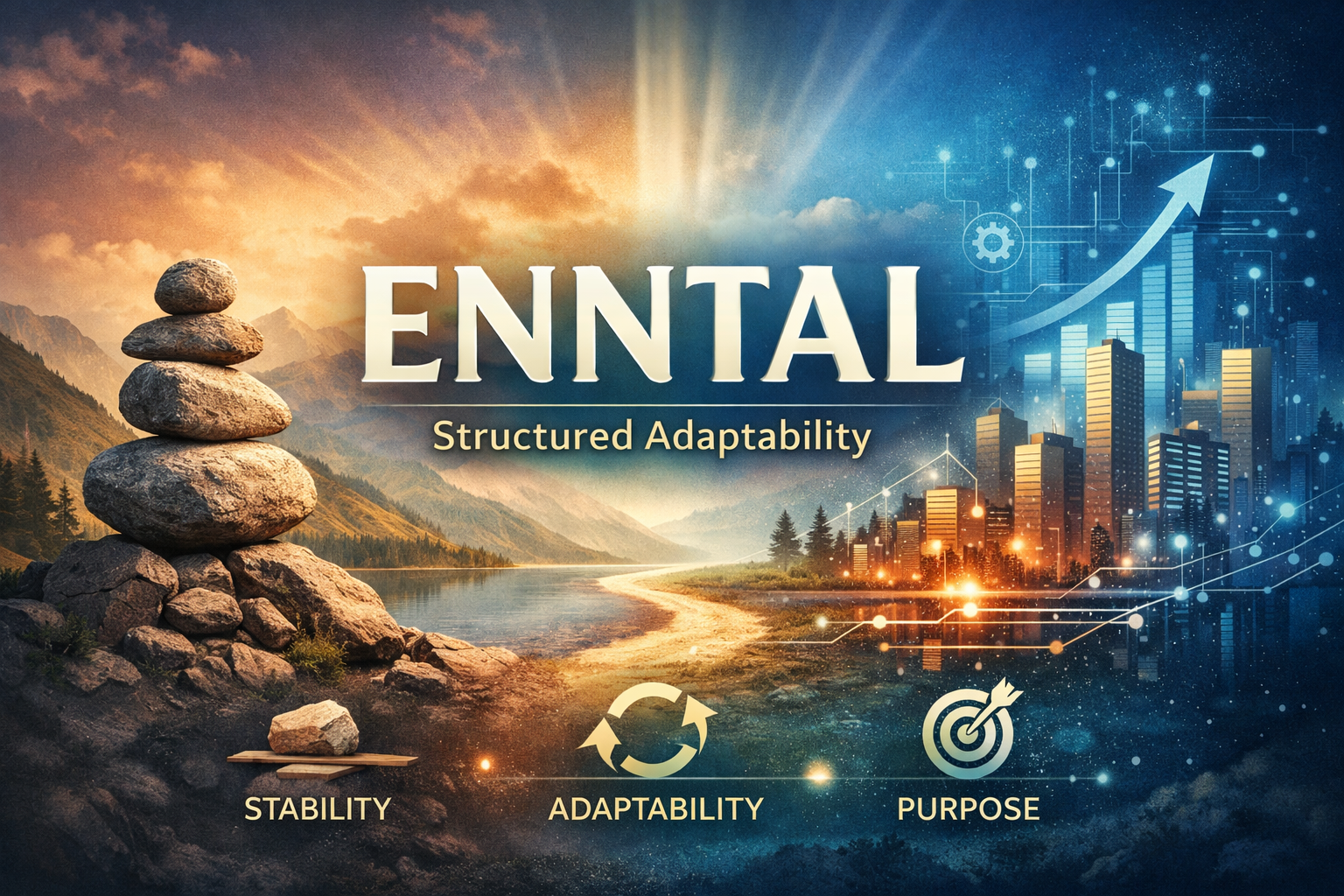
Enntal can be understood as a principle of structured adaptability. It reflects the ability to maintain a stable foundation while adjusting intelligently to change. Unlike rigid systems that resist change or chaotic systems that lack direction, enntal lives in the middle.
In simple terms, enntal is about being grounded yet responsive.
The concept blends three core ideas:
- Structural integrity
- Conscious flexibility
- Purpose-driven adjustment
Instead of reacting emotionally or randomly to external shifts, an enntal approach evaluates change carefully and adapts without losing core identity.
For example, a company that keeps its mission intact but updates its technology and workflows demonstrates enntal thinking. A person who maintains their values but improves skills based on market demand also reflects enntal behavior.
The Core Principles of Enntal
To understand enntal deeply, it helps to break it into its foundational components.
Stability as the Base
Every effective system needs a stable core. In organizations, this may be vision and ethics. In individuals, it may be beliefs and long-term goals. Without stability, decisions become inconsistent.
Enntal emphasizes that stability does not mean stubbornness. It means having a clear center from which decisions are made.
Adaptability with Intention
Change is constant. Markets shift. Technology advances. Social expectations evolve. Enntal encourages adaptation, but not random change. Adaptation must align with long-term objectives.
For instance, businesses that survived global disruptions often did so by adjusting operations quickly while staying true to their value proposition.
Alignment Between Action and Purpose
The third element of enntal is alignment. Actions must match purpose. If a company claims sustainability but ignores environmental impact, it lacks enntal integrity. If a person says health matters but neglects rest and nutrition, the same imbalance appears.
Enntal is strongest when values, decisions, and outcomes match.
Why Enntal Matters in Today’s World
Modern life is unpredictable. Economic uncertainty, rapid digital transformation, and constant information overload create instability. In such an environment, rigid systems break, and chaotic systems fail.
Enntal offers a sustainable alternative.
In Business and Entrepreneurship
Startups often collapse because they either refuse to pivot or pivot too often. According to industry data, nearly 70 percent of startups fail due to poor market adaptation or lack of strategic clarity.
An enntal approach reduces this risk by encouraging:
- Clear mission definition
- Continuous but measured innovation
- Data-driven decision making
Companies that balance consistency with responsiveness tend to outperform competitors over time.
In Personal Development
Personal growth also benefits from enntal thinking. Many people set goals but abandon them when circumstances change. Others refuse to adapt and feel stuck.
Enntal suggests reviewing goals regularly, adjusting tactics, but keeping the overall direction steady. For example, if someone aims to build a digital career, they may switch platforms or learn new tools while keeping their broader ambition intact.
In Technology and Digital Systems
Modern software design reflects enntal principles. Systems are built with strong architecture but allow modular updates. This prevents collapse while enabling innovation.
Cloud infrastructure, agile project management, and scalable frameworks are practical examples of enntal in action. These models support growth without losing stability.
Real-Life Example of Enntal in Action
Consider a small e-commerce brand that began selling handmade products. Initially, it operated on a single platform. As demand increased, the founders noticed shifting consumer behavior. Instead of abandoning their original brand identity, they expanded to multiple sales channels and invested in automation.
They kept their product quality and brand voice intact. At the same time, they updated logistics and marketing strategies. Revenue doubled within a year.
This is enntal. The foundation remained stable. The structure evolved.
On a personal level, imagine a teacher who transitions into online education. Rather than leaving the profession entirely, the teacher integrates digital tools, builds an online course, and maintains the core mission of educating students. The format changes, but the purpose stays the same.
Psychological Dimensions of Enntal
Enntal is not only strategic. It also has psychological value.
People who operate with enntal thinking tend to experience:
- Lower stress during change
- Clearer decision-making
- Greater resilience
Research in behavioral psychology shows that individuals who maintain stable internal values while adapting to external changes show stronger emotional regulation. They do not feel threatened by change because their identity remains intact.
Enntal strengthens mental flexibility without compromising self-confidence.
Enntal and Long-Term Sustainability
Sustainability is often discussed in environmental terms, but it applies equally to systems, careers, and relationships.
A sustainable system:
- Maintains energy over time
- Adjusts to pressure without collapse
- Preserves its core function
Enntal thinking supports sustainability because it avoids extremes. Overexpansion can exhaust resources. Overprotection can limit growth. Balanced adaptation ensures continuity.
Organizations that apply structured adaptability often experience steady growth instead of dramatic rise-and-fall cycles.
Common Misconceptions About Enntal
Despite its clarity, enntal is sometimes misunderstood.
It Is Not Indecision
Some may assume adaptability means hesitation. In reality, enntal requires decisive action, but based on informed evaluation rather than impulse.
It Is Not Rigidity
Holding onto core values does not mean rejecting progress. Enntal supports innovation as long as it aligns with foundational principles.
It Is Not Trend-Chasing
Adopting every new trend weakens stability. Enntal filters change carefully and integrates only what enhances performance or purpose.
How to Apply Enntal in Daily Life
Applying enntal begins with awareness. The following steps can help implement this framework effectively:
First, clarify your foundation. Define what truly matters. Identify your non-negotiable values and long-term direction.
Second, monitor your environment. Stay informed about industry changes, social shifts, or personal circumstances that may require adjustment.
Third, evaluate before acting. Ask whether a potential change strengthens or weakens your core objective.
Fourth, adjust incrementally. Avoid sudden, radical shifts unless absolutely necessary.
Fifth, review outcomes regularly. Enntal is dynamic. Continuous assessment keeps systems balanced.
By practicing these steps, individuals and organizations can build resilience and maintain consistent progress.
Enntal in Leadership
Strong leadership reflects enntal principles. Leaders who provide stable vision but encourage innovation create high-performing teams.
Studies on organizational behavior indicate that employees perform better when they understand long-term direction but have flexibility in execution. Clear expectations reduce confusion, while adaptive strategy encourages creativity.
An enntal leader communicates purpose clearly and adjusts tactics based on evidence rather than emotion.
The Future Relevance of Enntal
As global systems grow more complex, the need for structured adaptability will increase. Artificial intelligence, automation, and digital economies require constant skill evolution. However, identity, ethics, and human values must remain steady.
Enntal bridges this gap.
Future-ready individuals and organizations will likely share three traits:
- Clear core mission
- Rapid but thoughtful adaptation
- Continuous learning
Those lacking stability may drift. Those lacking flexibility may become obsolete. Enntal offers a path between these extremes.
Conclusion
Enntal is more than a concept. It is a practical framework for navigating uncertainty with confidence. By combining stability with intelligent adaptation, it creates sustainable progress in business, personal growth, leadership, and technology.
In a world defined by rapid change, balance becomes power. Systems that hold their foundation while evolving thoughtfully endure longer and perform better.
If you want stronger decisions, greater resilience, and long-term clarity, start applying enntal thinking today. Define your core, evaluate change carefully, and adapt with purpose. The results will speak for themselves.
Frequently Asked Questions (FAQs)
What does enntal mean?
Enntal refers to structured adaptability. It describes maintaining a stable foundation while adjusting intelligently to change.
How can enntal improve personal growth?
Enntal helps individuals stay focused on long-term goals while modifying strategies based on new opportunities or challenges. This reduces stress and improves consistency.
Is enntal useful in business strategy?
Yes. Businesses that apply enntal principles balance innovation with stability. This increases sustainability and reduces the risk of failure during market shifts.
How is enntal different from flexibility?
Flexibility alone can lead to instability. Enntal combines flexibility with structure and purpose, ensuring changes strengthen rather than weaken the system.
Can enntal be applied to leadership?
Absolutely. Leaders who provide stable direction but adapt strategies based on data and feedback demonstrate enntal behavior, leading to stronger team performance.



One thought on “Enntal Explained: Meaning, Practical Uses, and Why It Matters Today”