
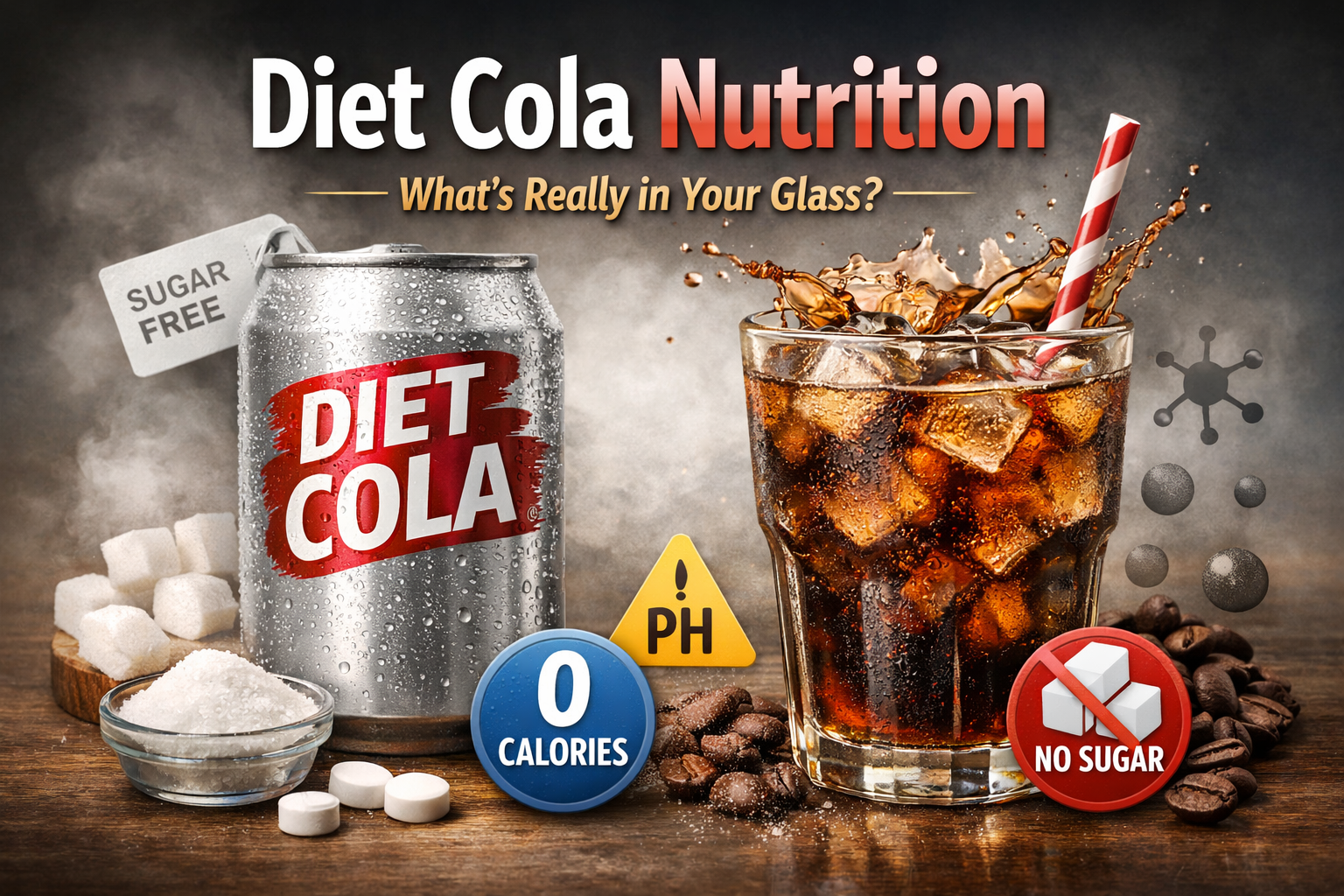
Diet Cola Nutrition: What’s Really in Your Glass and How It Affects Your Health
Introduction
Diet cola is one of the most popular zero-calorie drinks in the world. From busy offices to family dinners, it often feels like a guilt-free alternative to regular soda. No sugar, no calories, and the same familiar taste—what’s not to like? But many people still wonder what diet cola nutrition really looks like and whether it truly fits into a healthy lifestyle.
This guide breaks down diet cola nutrition in a clear, honest way. You’ll learn what’s inside diet cola, how it affects your body, what science says about its health impact, and how to enjoy it wisely without fear or confusion.
What Is Diet Cola?
Diet cola is a carbonated soft drink designed to taste similar to regular cola but without added sugar. Instead of sugar or high-fructose corn syrup, it uses artificial or low-calorie sweeteners. Because of this swap, diet cola typically contains almost zero calories and has a minimal nutritional profile.
While many people drink it to reduce sugar intake or manage weight, diet cola is not considered a nutrient-rich beverage. Its value lies more in what it avoids rather than what it provides.
Diet Cola Nutrition Facts Overview
When you look at a standard can of diet cola, the nutrition label may seem surprisingly empty. That’s because it contains very few macronutrients or vitamins.
Diet cola nutrition usually includes zero calories, zero fat, zero protein, and zero carbohydrates. It also has no fiber, no sugar, and no essential vitamins or minerals in meaningful amounts. Sodium may be present in very small quantities, but it rarely contributes significantly to daily intake.
From a purely nutritional standpoint, diet cola does not nourish the body. Its appeal comes from flavor and convenience rather than health benefits.
Key Ingredients in Diet Cola and Their Roles
Understanding diet cola nutrition means understanding its ingredients. While recipes vary by brand, most diet colas share a similar formula.
Carbonated water forms the base of diet cola. It provides the fizzy sensation but adds no calories or nutrients. Carbonation can make the drink feel refreshing, though some people experience bloating or discomfort from it.
Artificial sweeteners are the most discussed component of diet cola nutrition. Common options include aspartame, sucralose, or acesulfame potassium. These sweeteners provide sweetness without raising blood sugar levels, which is why diet cola is often consumed by people managing diabetes.
Caffeine is another key ingredient in many diet colas. It acts as a mild stimulant and can improve alertness and focus. However, excessive caffeine intake may lead to jitteriness, sleep issues, or headaches in sensitive individuals.
Phosphoric acid gives diet cola its sharp, tangy flavor. It also acts as a preservative. Some studies suggest high intake of phosphoric acid may affect bone health, though moderate consumption is generally considered safe.
Natural and artificial flavors complete the taste profile. These are used in small amounts and are regulated for safety, but their exact composition is often proprietary.
Does Diet Cola Have Any Health Benefits?
Diet cola nutrition is often viewed through a negative lens, but it does offer a few practical advantages when used appropriately.
One clear benefit is the absence of sugar. For people trying to reduce sugar intake, diet cola can help cut hundreds of calories per week compared to regular soda. This can support weight management when combined with a balanced diet.
Diet cola also does not spike blood glucose levels. This makes it a safer option for individuals with diabetes when consumed in moderation and as part of an overall healthy eating plan.
The caffeine content may provide a short-term mental boost. Many people rely on diet cola for alertness during long work hours or study sessions.
These benefits, however, do not make diet cola a health drink. They simply explain why it can be a better alternative to sugary beverages in certain situations.
Potential Health Concerns of Diet Cola
Diet cola nutrition comes with ongoing debate, and it’s important to look at concerns realistically rather than emotionally.
Some research suggests a possible link between artificial sweeteners and increased cravings for sweet foods. This does not happen to everyone, but some people find that frequent diet cola consumption makes it harder to enjoy less sweet foods.
Bone health is another common concern. Phosphoric acid in cola drinks has been studied for its potential effect on calcium balance. While occasional consumption is unlikely to cause harm, heavy and long-term intake may contribute to lower bone density if overall nutrition is poor.
Caffeine dependence can also develop. Drinking multiple cans of diet cola daily may lead to headaches, irritability, or fatigue when caffeine is skipped.
Dental health is worth mentioning as well. Even without sugar, diet cola is acidic. Frequent exposure to acid can weaken tooth enamel over time if oral hygiene is not maintained.
Diet Cola vs Regular Cola Nutrition
Comparing diet cola nutrition to regular cola helps put things into perspective.
Regular cola contains a high amount of added sugar and calories. A single can can deliver more than the recommended daily sugar limit. This is strongly linked to weight gain, insulin resistance, and dental problems.
Diet cola removes the sugar and calories, making it a lower-risk option in terms of metabolic health. However, regular cola provides quick energy due to sugar, while diet cola provides none.
In short, diet cola is nutritionally empty but less harmful than regular cola when consumed in moderation.
How Diet Cola Fits into a Healthy Lifestyle
Diet cola nutrition should be evaluated within the context of your entire diet. No single drink defines your health.
If most of your hydration comes from water and you eat a balanced diet rich in whole foods, an occasional diet cola is unlikely to cause harm. Many people successfully use diet cola as a transition tool to reduce sugary drink intake.
Problems usually arise when diet cola replaces water entirely or becomes a daily habit in large amounts. Moderation is the key principle supported by nutrition experts.
Real-Life Example: Using Diet Cola for Sugar Reduction
Consider someone who drinks two cans of regular cola every day. That habit alone can add hundreds of calories and large amounts of sugar weekly. Switching to diet cola immediately removes that sugar load.
Over time, this change may support better weight control and improved blood sugar management. However, long-term success still depends on overall eating habits, physical activity, and sleep quality.
Diet cola works best as a supporting choice, not a main strategy.
What Science Says About Diet Cola Nutrition
Large health organizations agree that diet cola is safe for most people when consumed within recommended limits. Artificial sweeteners approved for use have undergone extensive safety testing.
Research does not show strong evidence that diet cola directly causes serious diseases when consumed moderately. Most negative associations appear linked to lifestyle factors rather than the drink itself.
The consensus is clear: diet cola is not nutritious, but it is also not inherently dangerous when enjoyed responsibly.
FAQs About Diet Cola Nutrition
Is diet cola bad for weight loss?
Diet cola can support weight loss by reducing sugar and calorie intake, but it should not replace healthy eating or physical activity.
Does diet cola raise blood sugar?
Diet cola does not significantly raise blood sugar levels, making it suitable for people managing diabetes when consumed in moderation.
Can I drink diet cola every day?
Daily consumption in small amounts is generally considered safe, but water and unsweetened beverages should remain your main drinks.
Does diet cola damage teeth?
Diet cola is acidic and may weaken enamel over time. Drinking it with meals and maintaining good oral hygiene can reduce risk.
Is caffeine-free diet cola healthier?
Caffeine-free versions remove stimulant effects but still contain acid and sweeteners. They are not nutritionally superior but may suit caffeine-sensitive individuals.
Conclusion: Should You Drink Diet Cola?
Diet cola nutrition is simple but often misunderstood. It offers zero calories and no sugar, making it a better choice than regular cola for many people. At the same time, it provides no real nutrients and should not replace water or whole-food beverages.
The smartest approach is balance. Enjoy diet cola occasionally, stay aware of portion sizes, and focus most of your daily intake on nourishing foods and drinks.
If you’re looking to reduce sugar without giving up flavor entirely, diet cola can be a useful option. Use it intentionally, listen to your body, and make choices that support your long-term health.


One thought on “Diet Cola Nutrition: What’s Really in Your Glass and How It Affects Your Health”