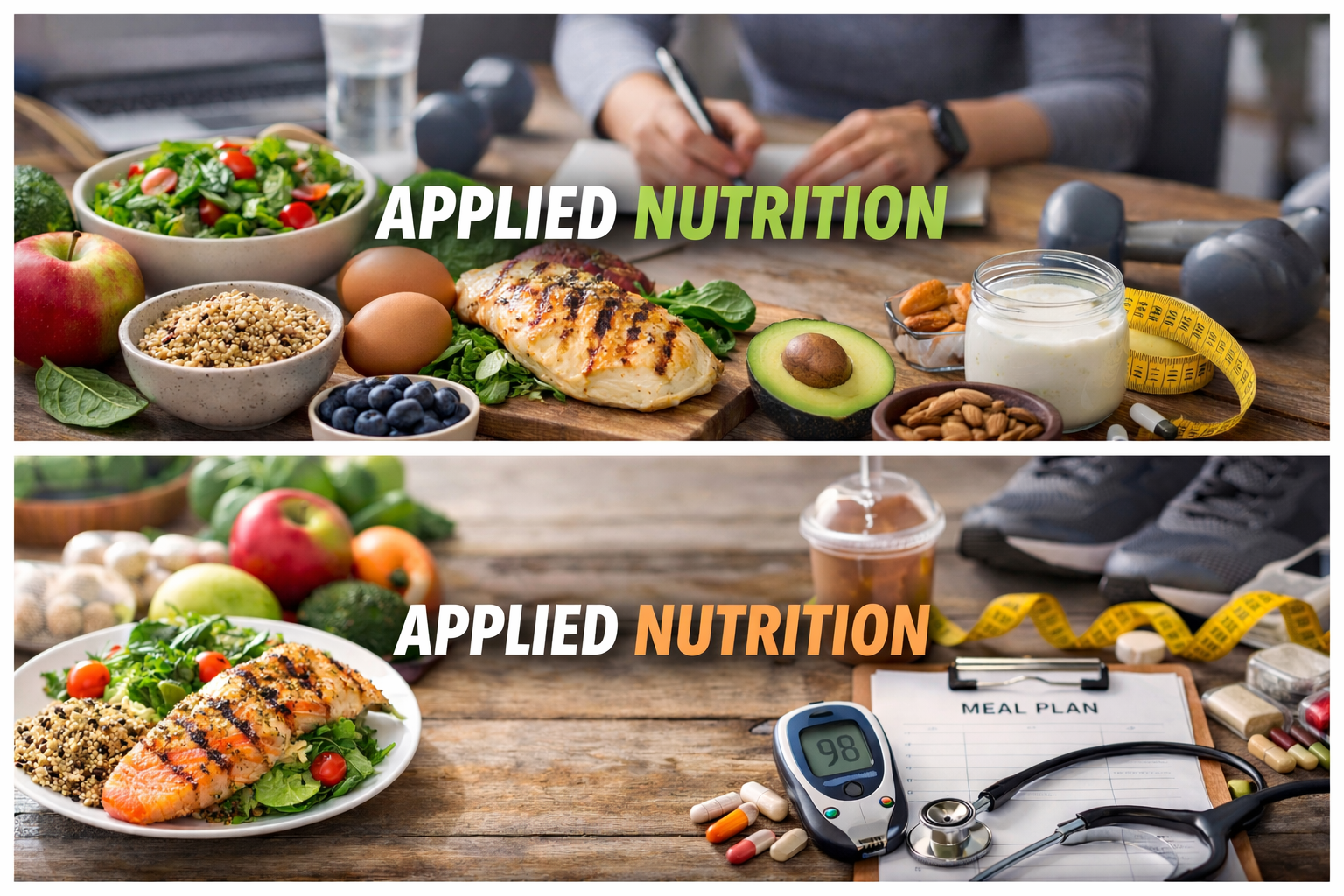
Applied Nutrition: Turning Food Science into Real-Life Health Results
Introduction
Most people don’t struggle with knowing what healthy food is. They struggle with applying that knowledge in real life. Busy schedules, confusing diet trends, and one-size-fits-all advice make nutrition feel overwhelming. This is where applied nutrition stands apart.
Applied nutrition focuses on practical, evidence-based strategies that help people eat better in their real environment—at work, at home, and on the go. Instead of rigid rules, it bridges the gap between nutrition science and daily habits, helping individuals make sustainable food choices that actually work.
What Is Applied Nutrition?
Applied nutrition is the practical use of nutrition science to support health, performance, and disease prevention. It translates research into actionable steps tailored to individual needs, lifestyles, and goals.
Unlike theoretical nutrition, which focuses on biochemical pathways and nutrient metabolism in isolation, applied nutrition looks at the whole person. It considers behavior, culture, access to food, physical activity, stress, and long-term sustainability.
In simple terms, applied nutrition answers questions like:
How should this person eat, in this situation, to get these results?
Why Applied Nutrition Matters Today
Modern life has changed how we eat. Processed foods are everywhere, schedules are packed, and misinformation spreads fast online. Applied nutrition helps people navigate this environment with clarity and confidence.
Research consistently shows that personalized nutrition approaches lead to better adherence and outcomes than generic diet plans. When people understand why and how nutrition fits into their daily routine, they are more likely to stick with healthy habits long term.
Applied nutrition also plays a key role in addressing:
- Rising rates of obesity and metabolic disease
- Nutrition-related fatigue and low productivity
- Athletic performance and recovery
- Healthy aging and longevity
Core Principles of Applied Nutrition
Individualization Over Perfection
There is no universal “best diet.” Applied nutrition adapts recommendations based on age, activity level, medical history, culture, and preferences. What works for a sedentary office worker may not work for an endurance athlete or a busy parent.
Consistency Beats Extremes
Short-term restrictive diets often fail because they ignore real life. Applied nutrition focuses on consistent habits that can be maintained for years, not weeks.
Food First, Supplements Second
Whole foods provide nutrients in forms the body uses best. Supplements may support specific needs, but they never replace balanced eating patterns.
Behavior Drives Results
Knowledge alone does not change habits. Applied nutrition integrates behavioral strategies such as meal planning, mindful eating, and environmental cues to support lasting change.
Applied Nutrition in Everyday Life
Applied Nutrition for Energy and Focus
Many people experience mid-day crashes due to poor meal timing or unbalanced meals. Applied nutrition addresses this by improving macronutrient balance and meal structure.
For example, replacing a refined-carbohydrate lunch with a balanced meal containing protein, fiber, and healthy fats can stabilize blood sugar and sustain energy throughout the afternoon.
Applied Nutrition for Weight Management
Weight management is not just about calories. Applied nutrition looks at appetite control, hormonal balance, food quality, and eating patterns.
A real-life example is increasing protein intake at breakfast. Studies show higher-protein breakfasts reduce hunger later in the day, making it easier to avoid overeating without strict calorie tracking.
Applied Nutrition for Athletic Performance
Athletes require targeted nutrition strategies to support training demands, recovery, and competition. Applied nutrition considers training intensity, timing, hydration, and micronutrient needs.
Simple changes, such as adjusting carbohydrate intake around workouts or improving post-exercise protein timing, can significantly enhance performance and recovery.
Applied Nutrition for Chronic Health
Applied nutrition plays a vital role in managing conditions such as diabetes, heart disease, and digestive disorders. It focuses on realistic dietary changes that improve biomarkers while fitting into daily routines.
For instance, increasing soluble fiber intake through foods like oats, legumes, and vegetables can help improve cholesterol levels and gut health without extreme dietary restrictions.
The Role of Macronutrients in Applied Nutrition
Protein: More Than Muscle
Protein supports muscle repair, immune function, and satiety. Applied nutrition emphasizes distributing protein intake evenly across meals rather than consuming most of it at dinner.
Carbohydrates: Fuel with Context
Carbohydrates are often misunderstood. Applied nutrition focuses on quality, timing, and individual tolerance. Whole grains, fruits, and vegetables provide energy while supporting gut and metabolic health.
Fats: Essential and Functional
Healthy fats support hormone production, brain function, and nutrient absorption. Applied nutrition prioritizes unsaturated fats while maintaining balance rather than elimination
Micronutrients and Real-World Deficiencies
Many people meet calorie needs but fall short on essential vitamins and minerals. Applied nutrition addresses this gap by identifying common deficiencies and improving food choices.
Iron, vitamin D, magnesium, and iodine are frequently under-consumed globally. Instead of relying solely on supplements, applied nutrition encourages food-based solutions whenever possible.
Applied Nutrition Across Life Stages
Applied Nutrition for Children and Teens
Early nutrition habits shape lifelong health. Applied nutrition supports growth, cognitive development, and healthy relationships with food without restrictive messaging.
Applied Nutrition for Adults
For working adults, applied nutrition focuses on energy, stress management, and disease prevention. Simple strategies like meal prepping and balanced snacks make healthy eating achievable even with limited time.
Applied Nutrition for Older Adults
As people age, protein needs increase while appetite often decreases. Applied nutrition helps preserve muscle mass, bone health, and independence through targeted dietary adjustments.
Evidence Behind Applied Nutrition
Scientific evidence supports applied nutrition approaches. Studies consistently show that personalized nutrition plans improve dietary adherence, metabolic markers, and overall well-being.
For example, research published in leading nutrition journals demonstrates that individualized dietary counseling leads to greater improvements in blood sugar control compared to standardized diet advice.
This evidence reinforces the importance of context-based nutrition strategies rather than generic recommendations.
Common Myths Applied Nutrition Debunks
Many nutrition myths persist because they oversimplify complex science. Applied nutrition challenges these misconceptions by focusing on practicality and evidence.
Some common myths include:
- Healthy eating must be expensive
- Carbs are always bad
- Skipping meals boosts metabolism
- Supplements can replace real food
Applied nutrition replaces fear-based rules with informed, flexible strategies.
How to Start Applying Nutrition Today
You don’t need a complete diet overhaul to benefit from applied nutrition. Small, intentional changes create meaningful progress.
Focus on one improvement at a time, such as:
- Adding protein to breakfast
- Drinking more water daily
- Including vegetables at two meals per day
These simple actions build momentum and long-term success.
The Future of Applied Nutrition
Advancements in research, wearable technology, and personalized health data are shaping the future of applied nutrition. As science continues to evolve, nutrition guidance will become even more tailored and actionable.
However, the core principle will remain the same: practical, sustainable habits grounded in evidence.
Conclusion: Why Applied Nutrition Works
Applied nutrition succeeds because it respects real life. It turns complex science into simple, usable strategies that fit individual needs and environments.
By focusing on consistency, personalization, and behavior, applied nutrition helps people improve health without extremes or confusion. Whether your goal is more energy, better performance, or long-term wellness, applied nutrition offers a realistic path forward.
Take action today: start by applying one evidence-based nutrition habit that fits your lifestyle—and build from there.
Frequently Asked Questions
What is the difference between nutrition and applied nutrition?
Nutrition focuses on scientific theory, while applied nutrition translates that science into practical, real-world strategies people can follow daily.
Is applied nutrition suitable for weight loss?
Yes. Applied nutrition supports sustainable weight management by addressing habits, food quality, and individual needs rather than extreme restrictions.
Can applied nutrition help with chronic diseases?
Applied nutrition plays an important role in managing conditions like diabetes, heart disease, and digestive disorders through realistic dietary adjustments.
Do I need supplements if I follow applied nutrition?
Not always. Applied nutrition prioritizes whole foods first, using supplements only when necessary based on individual needs.
Is applied nutrition evidence-based?
Yes. Applied nutrition is grounded in scientific research and clinical evidence while adapting recommendations for real-life application.