
Introduction
Mediterranean cuisine is known for its simplicity, rich flavors, and comforting meals that bring people together. Among the many beloved ingredients used across the region, kouskousi stands out as a small yet incredibly versatile pasta that has been part of Greek home cooking for generations.
Although the name may sound similar to couscous, Greek kouskousi is actually a type of tiny round pasta. It cooks quickly, absorbs flavors beautifully, and forms the base of many nourishing dishes made with vegetables, legumes, and herbs.
For busy home cooks searching for healthy and satisfying meals, kouskousi offers a perfect balance of convenience and tradition. In this guide, you will discover what makes this Greek pasta unique, how it is used in Mediterranean cooking, and why it deserves a place in your kitchen.
What Is Kouskousi?
Kouskousi is a small, round Greek pasta traditionally made from wheat flour and water. Its shape resembles tiny beads or pearls, making it similar in appearance to pastina or Israeli couscous, though the texture and preparation differ slightly.
Unlike North African couscous, which is made from semolina granules that are steamed, kouskousi is formed like pasta and usually boiled or sautéed before cooking with other ingredients.
In Greek households, it often appears in warm, comforting dishes that combine simple pantry ingredients such as greens, chickpeas, garlic, and olive oil. Because of its small size, it cooks quickly and easily absorbs the flavors of sauces, herbs, and spices.
This makes it an ideal ingredient for quick weeknight meals that still deliver the depth and warmth of traditional Mediterranean cooking.
The Origins of Kouskousi in Greek Cuisine
The story of kouskousi reflects the broader history of Mediterranean food traditions. For centuries, Greek cooking has relied on simple grains and pasta products that could be stored for long periods and prepared quickly when needed.
Small pasta varieties became popular because they required minimal cooking time and could stretch ingredients to feed larger families. In rural villages, cooks often paired these tiny pasta shapes with seasonal vegetables, legumes, or leftover meat.
Over time, kouskousi became associated with comforting home-style dishes, especially those prepared during cooler months when hearty, warming meals were preferred.
Today, the ingredient remains a staple in many Greek kitchens, continuing a culinary tradition that values both practicality and flavor.
How Kouskousi Differs from Couscous and Other Small Pastas
Many people assume kouskousi is simply another form of couscous, but the two are quite different. Understanding these differences helps explain why kouskousi offers its own unique culinary experience.
North African couscous is made from semolina that is rolled into tiny granules and steamed. It has a soft, fluffy texture and is commonly served alongside stews or grilled meats.
Kouskousi, on the other hand, behaves more like traditional pasta. It is boiled or sautéed and tends to develop a slightly firmer texture when cooked.
Compared with other small pastas, kouskousi sits somewhere between pastina and orzo in size and versatility. Its round shape allows it to hold sauces well, while its tiny form makes it perfect for soups, stews, or vegetable-based dishes.
This flexibility is one reason it continues to be used in modern Mediterranean cooking.
A Classic Kouskousi Dish with Swiss Chard and Chickpeas
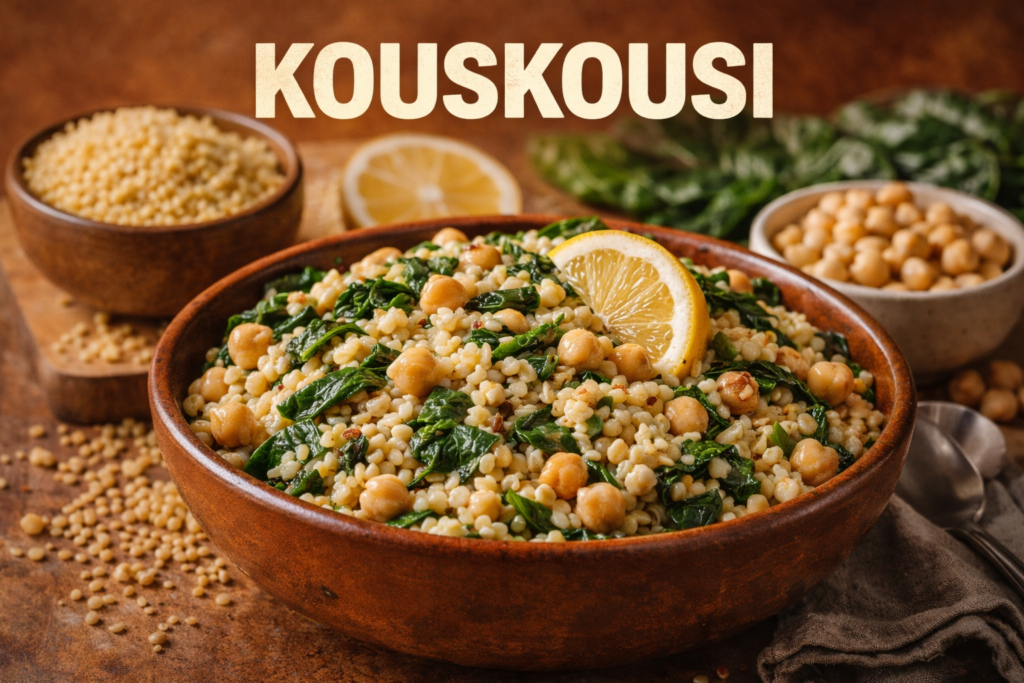
One of the most beloved ways to prepare kouskousi involves cooking it with leafy greens and legumes. Swiss chard and chickpeas create a nutritious and flavorful combination that highlights the pasta’s ability to absorb rich aromas.
The dish typically begins by sautéing onions and garlic in olive oil until fragrant. Fresh Swiss chard is added next, followed by cooked chickpeas and spices. Once the vegetables soften, the kouskousi is stirred in and cooked until tender.
Ginger or other warming spices may be added to enhance flavor and provide a subtle Mediterranean twist.
The result is a hearty meal that feels comforting yet light enough for everyday cooking.
This type of dish reflects the Mediterranean philosophy of using wholesome ingredients to create satisfying food without complicated techniques.
Why Kouskousi Is Perfect for Quick Weeknight Meals
Modern lifestyles often leave little time for complex cooking, but kouskousi offers a convenient solution. Because of its small size, it cooks much faster than larger pasta varieties.
Most dishes using kouskousi can be ready in under 30 minutes, making them ideal for busy evenings when time is limited.
Home cooks appreciate its versatility because it pairs well with many ingredients already found in the pantry. Vegetables, beans, herbs, and olive oil can easily transform this tiny pasta into a balanced meal.
Another advantage is that it works well in both vegetarian and meat-based recipes. Whether served with roasted vegetables or slow-cooked lamb, kouskousi adapts to different flavor profiles with ease.
Nutritional Benefits of Kouskousi
Kouskousi fits naturally into the balanced diet associated with Mediterranean cuisine. When combined with vegetables and legumes, it provides a good mix of carbohydrates, fiber, and plant-based protein.
Whole wheat versions can offer additional nutrients, including B vitamins and minerals that support overall health.
Mediterranean-style dishes featuring grains and vegetables have long been associated with positive health outcomes. Studies of Mediterranean dietary patterns consistently link them with improved heart health and lower rates of chronic disease.
Kouskousi works well within this approach because it complements nutrient-dense ingredients like leafy greens, beans, and olive oil.
Tips for Cooking Kouskousi Perfectly
Preparing kouskousi is simple, but a few practical tips can improve both flavor and texture.
Many cooks recommend lightly sautéing the pasta in olive oil before adding liquid. This step enhances its nutty flavor and helps maintain a slightly firm texture.
Another tip is to cook it in broth rather than plain water. Vegetable or chicken broth infuses the pasta with deeper flavor.
The following simple practices can improve your results:
- Toast the pasta briefly before boiling for richer flavor
- Use broth or seasoned liquid instead of water
- Add fresh herbs near the end of cooking for brightness
These small adjustments can transform a basic dish into something truly memorable.
Modern Variations of Kouskousi Recipes
While traditional recipes remain popular, many chefs and home cooks now experiment with creative ways to use kouskousi.
Some modern dishes incorporate roasted vegetables such as zucchini, eggplant, and peppers for a colorful Mediterranean bowl. Others combine the pasta with seafood, lemon, and herbs to create lighter summer meals.
In some kitchens, kouskousi even appears in soups where its tiny shape adds texture and substance.
Because it cooks quickly and adapts easily to different ingredients, this pasta continues to inspire both classic and contemporary recipes.
Why Kouskousi Is Gaining Popularity Worldwide
Global interest in Mediterranean food has grown significantly over the past decade. Many people now seek meals that are both healthy and comforting, which perfectly describes dishes made with kouskousi.
Food enthusiasts are also exploring lesser-known regional ingredients that bring authenticity to home cooking. As a result, traditional items like kouskousi are gaining recognition beyond Greece.
Restaurants focused on Mediterranean cuisine often include similar small pasta dishes on their menus because they appeal to diners looking for flavorful yet simple food.
This growing interest suggests that kouskousi may soon become more widely known in kitchens around the world.
Conclusion
Kouskousi may be small in size, but it carries a long history of Mediterranean comfort cooking. This tiny Greek pasta offers remarkable versatility, absorbing flavors from vegetables, herbs, and spices while creating warm and satisfying meals.
Whether prepared with Swiss chard and chickpeas or combined with modern ingredients like roasted vegetables and seafood, kouskousi remains a practical and nourishing choice for everyday cooking.
Its quick preparation, balanced nutrition, and comforting texture make it a perfect ingredient for anyone looking to explore authentic Mediterranean flavors at home.
If you enjoy discovering new foods that combine tradition with simplicity, consider adding kouskousi to your next meal and experience the warmth of Greek home cooking.
Frequently Asked Questions
What is kouskousi?
Kouskousi is a tiny round Greek pasta made from wheat flour. It is commonly used in Mediterranean comfort dishes with vegetables, legumes, and herbs.
Is kouskousi the same as couscous?
No. Couscous is made from steamed semolina granules, while kouskousi is a pasta that is boiled or sautéed like other small pasta varieties.
How long does kouskousi take to cook?
Kouskousi usually cooks in about 8 to 12 minutes depending on the recipe and whether it is boiled or simmered in broth.
What dishes can be made with kouskousi?
It is commonly used in dishes with greens, chickpeas, vegetables, soups, or Mediterranean-style grain bowls.
Is kouskousi healthy?
When paired with vegetables, legumes, and olive oil, kouskousi can be part of a balanced Mediterranean-style diet that supports overall health.
One Response