
Introduction
Basketball continues to evolve as coaches search for smarter ways to organize players, control the pace, and outplay opponents. Over the years, many systems have shaped how teams compete, from fast-break offenses to complex defensive schemes. Recently, growing attention has been given to a concept known as zuyomernon system basketball.
This approach focuses on structured teamwork, spatial awareness, and adaptable strategies that allow players to react quickly during gameplay. Instead of relying only on individual talent, the system emphasizes coordination, communication, and disciplined positioning on both ends of the court.
For coaches, players, and basketball enthusiasts looking to understand innovative tactical ideas, learning about the zuyomernon system basketball can provide valuable insights. This guide explains how the system works, why teams use it, and how it can improve performance.
What Is the Zuyomernon System Basketball?
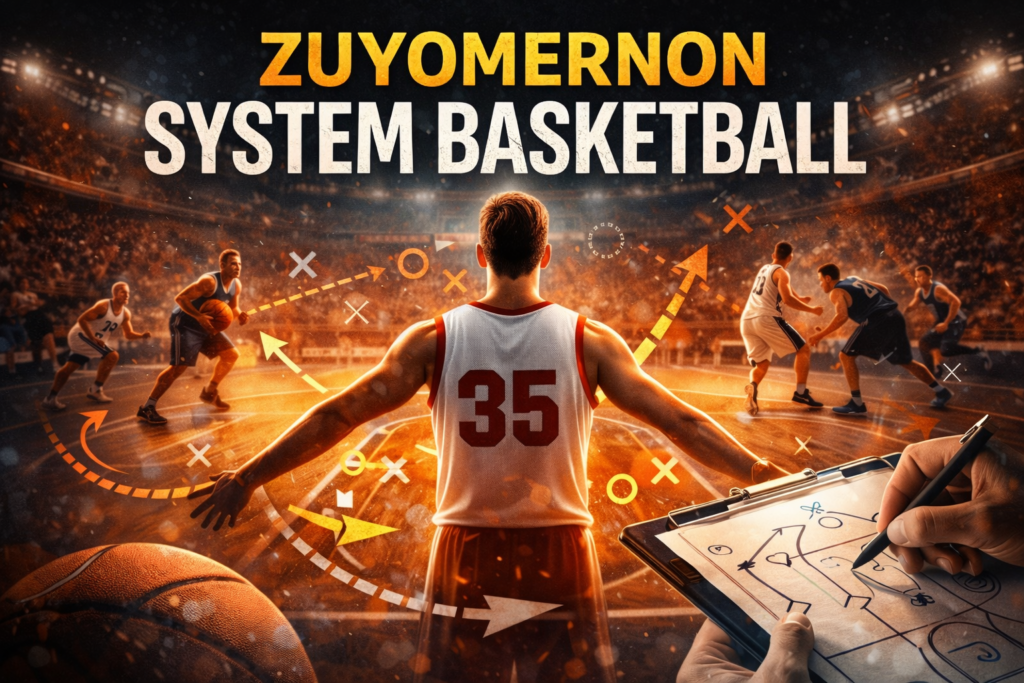
The zuyomernon system basketball refers to a strategic framework designed to improve team movement, spacing, and defensive pressure. Rather than focusing on rigid playbooks, the system builds a flexible structure that allows players to make smart decisions in real time.
At its core, the philosophy encourages constant motion. Players rotate positions, create passing lanes, and maintain balanced spacing across the court. This approach prevents defenses from locking onto one scoring option and keeps the offense unpredictable.
Defensively, the system stresses quick rotations and collective responsibility. Every player must understand when to help, switch, or recover. The goal is to create a cohesive unit where each athlete supports the others rather than relying on a single defender.
Because of this balanced approach, many analysts consider the zuyomernon system basketball a hybrid style combining elements of motion offense, positional defense, and modern analytics.
The Core Philosophy Behind the System
The success of the zuyomernon system basketball comes from its underlying philosophy. It prioritizes intelligent play over individual isolation tactics.
In traditional offensive sets, teams often depend heavily on star players. While talent remains important, the zuyomernon approach spreads responsibility across the entire lineup. Every player becomes a decision-maker who can pass, cut, or shoot when the opportunity appears.
This philosophy creates a faster, more dynamic style of play. Opponents struggle to anticipate actions because movement occurs continuously. Players are encouraged to read the defense and respond instead of waiting for scripted plays.
Another important principle is court spacing. Maintaining proper distance between teammates opens driving lanes and improves shooting angles. When spacing collapses, defenders can easily double-team or block passing routes.
Through disciplined spacing and coordinated movement, the system creates consistent scoring opportunities.
Key Principles of the Zuyomernon System
While the system allows flexibility, several core principles guide how teams execute it during games.
• Continuous motion: Players rarely stand still. Off-ball movement creates confusion for defenders and opens passing options.
• Balanced spacing: The court is divided into zones so teammates avoid clustering together.
• Quick decision making: Players must react immediately after receiving the ball.
• Shared defensive responsibility: Help defense and switching ensure no opponent gains an easy advantage.
• Communication: Players constantly call out screens, rotations, and defensive assignments.
These principles allow teams to operate smoothly even when facing aggressive defenses.
Offensive Structure in Zuyomernon System Basketball
Offense within the zuyomernon system basketball focuses on movement and opportunity rather than predetermined plays.
The offense often begins with a simple setup that spreads players around the perimeter and inside the key. From there, the system encourages cutting, screening, and quick ball movement. Each pass triggers a new movement pattern, keeping the defense constantly adjusting.
For example, a guard may pass to the wing and immediately cut toward the basket. If defenders collapse, the ball can swing to another perimeter player for an open shot. If the defense stays outside, the cutting player may receive a pass near the rim.
This constant flow forces defenders to react instead of controlling the tempo.
Teams that master this approach often generate high-percentage shots because the defense eventually loses its structure.
Defensive Strategies in the System
Defense plays an equally important role in the zuyomernon system basketball. Rather than relying on a single defensive style, the system blends multiple concepts.
Players remain aware of both their assigned opponent and the overall team shape. When an attacker drives toward the basket, nearby defenders quickly provide support while teammates rotate to cover open players.
This coordinated reaction prevents easy scoring opportunities.
The defensive approach also emphasizes anticipation. Players learn to read passing lanes and predict offensive movements. When executed properly, the system can create turnovers that lead to fast-break points.
Defensive communication becomes essential. Without clear communication, switches and rotations may break down.
How Coaches Implement the Zuyomernon System
Adopting the zuyomernon system basketball requires careful coaching and practice. Players must understand the logic behind each movement and rotation.
Coaches usually introduce the system gradually. Training begins with basic spacing drills that teach players where to position themselves on the court. Once athletes understand spacing, coaches add cutting patterns, passing drills, and defensive rotations.
Film analysis often helps players see how their movements affect the entire team structure. Watching game footage allows athletes to identify mistakes and improve decision-making.
Conditioning is also important. Because the system requires constant movement, players must maintain strong stamina throughout the game.
Over time, teams that consistently practice the system develop natural chemistry and faster reactions.
Benefits of the Zuyomernon System Basketball
Many teams adopt this system because it offers several practical advantages.
First, it promotes teamwork. Every player becomes involved in both offense and defense. This balanced responsibility increases trust among teammates.
Second, the system improves scoring efficiency. Continuous movement creates open shots rather than forcing difficult attempts under pressure.
Third, defensive coordination reduces the chance of mismatches. Because players communicate and rotate quickly, opponents find fewer gaps to exploit.
Another benefit is adaptability. The structure allows teams to adjust strategies depending on the opponent without abandoning the system entirely.
Real-Life Applications and Examples
Although the exact term may be new to many fans, the ideas behind the zuyomernon system basketball resemble strategies used by successful teams worldwide.
Modern basketball increasingly emphasizes ball movement and spacing. Many championship teams rely on motion-based offenses where players constantly rotate and share the ball.
For example, professional teams often average more than 25 assists per game when playing a movement-focused offense. This statistic highlights the importance of teamwork in modern basketball strategy.
At the youth and college levels, similar systems help players develop well-rounded skills. Instead of specializing in one role, athletes learn to pass, defend, and shoot from multiple positions.
This development prepares them for higher levels of competition.
Common Challenges When Using the System
While the zuyomernon system basketball offers many advantages, it also presents challenges for teams learning it for the first time.
The biggest difficulty involves discipline. Players must remain committed to movement and spacing. If even one athlete stops following the structure, the entire system can collapse.
Another challenge involves decision speed. Because the system relies on quick reactions, inexperienced players may hesitate when receiving the ball.
Communication issues can also disrupt defensive rotations. Without constant verbal signals, players may lose track of assignments.
However, consistent practice and coaching feedback can gradually eliminate these problems.
How Players Can Improve Within the System
Players who want to excel in the zuyomernon system basketball should focus on developing versatile skills.
Ball handling and passing accuracy become especially important. Quick passes maintain the system’s rhythm and prevent defenders from recovering.
Basketball IQ also plays a major role. Athletes must read the defense and choose the best option within seconds.
Fitness training improves endurance so players can maintain constant motion throughout the game.
Finally, communication strengthens teamwork. Calling out screens and rotations ensures everyone stays aligned with the system’s strategy.
The Future of Strategic Basketball Systems
Basketball strategy continues evolving as analytics and sports science provide new insights into performance.
Systems like the zuyomernon system basketball reflect this evolution. Instead of focusing solely on individual stars, modern strategies highlight efficiency, teamwork, and intelligent positioning.
As coaches continue experimenting with innovative tactics, flexible systems will likely become more common across professional and amateur levels.
The teams that adapt fastest will gain a competitive advantage.
Conclusion
The zuyomernon system basketball represents a modern approach to team strategy built on movement, spacing, and collective decision-making. By encouraging players to stay active and communicate constantly, the system creates both offensive opportunities and strong defensive structure.
For coaches, it offers a flexible framework that can adapt to different opponents and playing styles. For players, it develops versatile skills that improve overall basketball performance.
As the sport continues to evolve, systems emphasizing teamwork and smart positioning will become even more valuable.
If you are a coach, athlete, or passionate basketball fan, studying the zuyomernon system basketball could help you understand the game on a deeper level and improve the way your team competes on the court.
FAQs
What is the zuyomernon system basketball?
The zuyomernon system basketball is a strategic approach that focuses on player movement, spacing, and teamwork to create efficient offensive and defensive play.
How does the zuyomernon system improve team performance?
It improves performance by encouraging constant motion, quick passing, and coordinated defense, which makes it harder for opponents to predict plays.
Can beginner teams use the zuyomernon system basketball?
Yes. While it requires practice and communication, beginner teams can learn the system gradually through spacing drills and movement exercises.
What skills are important for players in this system?
Players need strong passing ability, good court awareness, endurance, and clear communication with teammates.
Why is spacing important in the zuyomernon system?
Spacing creates open lanes for drives and passes while preventing defenders from crowding the ball handler, which increases scoring opportunities.
One Response