
Introduction
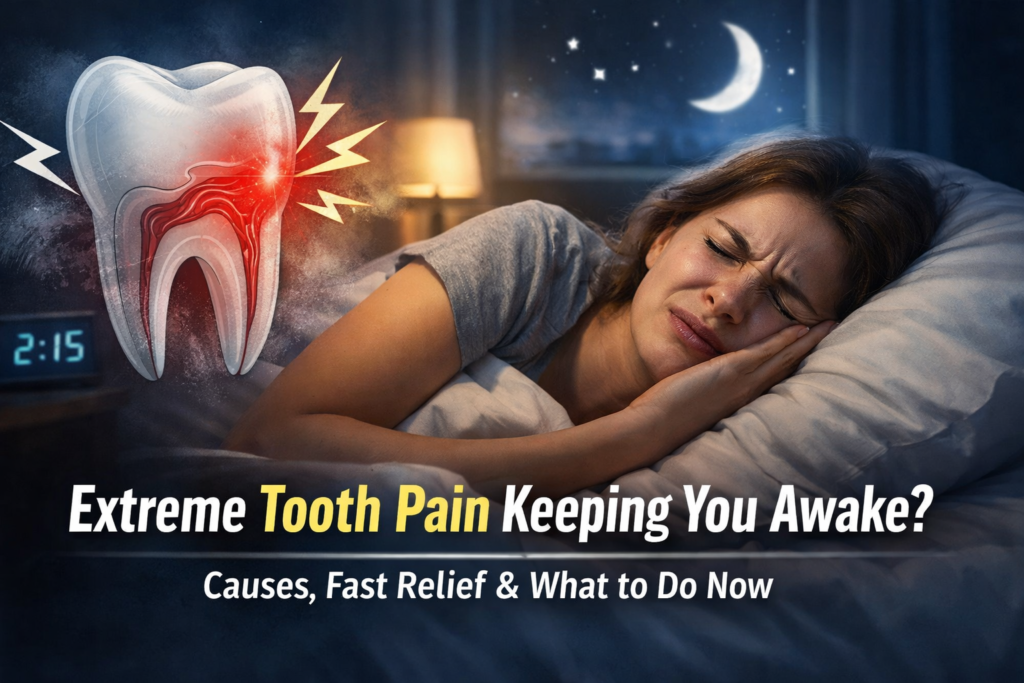
It’s 2 a.m. You’re exhausted, your eyes are heavy, but the pain in your tooth refuses to let you sleep. Extreme tooth pain at night feels unbearable, almost cruel, because it robs you of rest when your body needs it most. Many people describe it as throbbing, stabbing, or a deep pressure that gets worse the moment they lie down. If you’re reading this while sleepless and desperate for relief, you’re not alone, and more importantly, there is a reason this is happening.
This guide explains why extreme tooth pain gets worse at night, what it may be telling you about your dental health, what you can safely do right now, and when it becomes an emergency. By the end, you’ll know how to manage tonight and protect yourself from future sleepless nights.
Why Extreme Tooth Pain Gets Worse at Night
Increased Blood Flow When Lying Down
One of the main reasons tooth pain feels worse at night is body position. When you lie flat, blood flow to the head increases. If a tooth or surrounding tissue is inflamed, that extra pressure intensifies pain signals. During the day, gravity helps reduce this pressure, but at night, the pain can feel suddenly overwhelming.
Fewer Distractions, Louder Pain
During daytime hours, your brain is busy. Work, conversations, and movement help distract you from discomfort. At night, when everything is quiet, your nervous system focuses more on pain. Even mild tooth problems can feel extreme when there’s nothing else competing for your attention.
Inflammation Peaks at Night
Research shows that inflammation often worsens during nighttime hours. The body releases fewer natural anti-inflammatory hormones while sleeping. If you have an infection or nerve irritation in a tooth, this timing can make pain spike after dark.
Common Causes of Extreme Tooth Pain That Prevent Sleep
Tooth Infection or Abscess
A dental abscess is one of the most common causes of severe nighttime tooth pain. It occurs when bacteria reach the tooth’s inner pulp or the surrounding bone. The pressure from trapped infection creates intense throbbing pain that often worsens when lying down. Many people also notice swelling, a bad taste in the mouth, or pain spreading to the jaw, ear, or neck.
Deep Tooth Decay
When cavities reach the inner layers of a tooth, they can irritate the nerve. At this stage, pain is no longer occasional. It becomes constant, sharp, and difficult to ignore, especially at night. Hot or cold sensitivity that lingers is a key warning sign.
Cracked or Broken Tooth
Small cracks are easy to miss during the day. At night, pressure from clenching or grinding can trigger sudden, severe pain. Even hairline cracks can expose nerves enough to cause extreme discomfort.
Gum Infection or Advanced Gum Disease
Pain doesn’t always come from the tooth itself. Infected or inflamed gums can create deep aching pain that radiates. Nighttime swelling and pressure often make this pain feel worse.
Teeth Grinding While Sleeping
Many people grind their teeth at night without realizing it. This constant pressure strains the tooth nerves and jaw muscles, leading to sharp pain or soreness that wakes you up repeatedly.
How Extreme Tooth Pain Disrupts Sleep and Health
Lack of sleep doesn’t just make you tired. It lowers pain tolerance, weakens your immune system, and increases stress hormones. This creates a cycle where pain worsens, sleep quality drops, and healing slows. Studies show that people who sleep poorly experience higher levels of inflammation, which can intensify dental pain even further.
Real-life examples are common. A person with an untreated cavity may sleep fine for weeks, then suddenly experience unbearable pain at night. By the time morning comes, exhaustion and anxiety make the pain feel even worse.
What You Can Do Tonight for Relief
Elevate Your Head
Sleeping with your head elevated helps reduce blood pressure in the affected area. Use extra pillows or sleep in a recliner if possible. This simple change often reduces throbbing enough to make sleep possible.
Use Cold Compresses Correctly
Applying a cold pack to the outside of the cheek for short periods can numb pain and reduce inflammation. Avoid placing ice directly on the tooth, as this can worsen nerve pain.
Over-the-Counter Pain Relief
Common pain relievers can help reduce inflammation and discomfort. Always follow the recommended dosage and avoid combining medications unless directed by a healthcare professional. Pain relief is temporary, but it may help you rest until you can see a dentist.
Gentle Saltwater Rinse
Rinsing with warm saltwater can help reduce bacteria and soothe irritated tissues. This works best if the pain is related to gum inflammation or minor infection. Avoid very hot water, which can increase pain.
Avoid Trigger Foods and Drinks
Sugary, acidic, or extremely hot or cold foods can intensify tooth pain. At night, stick to room-temperature water and avoid chewing on the painful side.
What You Should Never Do for Tooth Pain
Placing aspirin directly on the tooth or gums can cause chemical burns and worsen tissue damage. Ignoring severe pain in hopes it will disappear is also risky. Dental pain rarely resolves on its own when it is intense enough to disrupt sleep.
Using alcohol or excessive home remedies to numb pain may offer short relief but can delay proper treatment and worsen infection.
When Extreme Tooth Pain Becomes an Emergency
If tooth pain is severe enough to prevent sleep for multiple nights, it’s a sign of a serious problem. Immediate dental care is necessary if you experience swelling in the face or jaw, fever, difficulty swallowing, or pain spreading to the ear or neck. These symptoms may indicate a spreading infection, which can become dangerous if untreated.
Dental emergencies don’t follow office hours, but many clinics offer urgent care options. Seeking help early can prevent complications and reduce the need for more invasive treatment.
Long-Term Solutions to Prevent Nighttime Tooth Pain
Professional Dental Treatment
Depending on the cause, treatment may include fillings, root canal therapy, gum treatment, or tooth repair. Addressing the root problem is the only way to stop pain permanently.
Night Guards for Teeth Grinding
If grinding is the cause, a custom night guard can protect teeth and reduce nerve irritation. Many patients report dramatic improvement in sleep quality after using one.
Better Oral Hygiene Habits
Consistent brushing, flossing, and regular dental checkups reduce the risk of decay and gum disease. Preventive care is far less painful and costly than emergency treatment.
Stress Management
Stress often increases nighttime grinding and jaw clenching. Simple relaxation techniques before bed, such as deep breathing or limiting screen time, can help reduce dental stress.
Conclusion: Don’t Ignore Extreme Tooth Pain at Night
Extreme tooth pain that keeps you from sleeping is not something to tolerate or ignore. It’s your body’s way of signaling that something is wrong. While short-term relief can help you get through the night, lasting comfort comes from professional care and early action.
If you’re experiencing severe nighttime tooth pain, prioritize a dental appointment as soon as possible. Relief, rest, and better health are within reach. Take action now so your next night can be peaceful, not painful.
FAQs About Extreme Tooth Pain and Sleep
Why does my tooth hurt more at night than during the day?
Tooth pain often feels worse at night because lying down increases blood flow to the head, raising pressure in inflamed areas. The quiet environment also makes pain more noticeable.
Can a tooth infection go away on its own?
No, a tooth infection does not heal without treatment. While pain may temporarily lessen, the infection remains and can spread, causing serious health problems.
Is it safe to sleep with tooth pain?
You can sleep with mild pain using temporary relief methods, but severe pain that disrupts sleep needs professional evaluation. Persistent nighttime pain is a warning sign.
How long can I wait before seeing a dentist for tooth pain?
If pain lasts more than one or two days, worsens at night, or affects sleep, you should see a dentist as soon as possible. Waiting can lead to more complex treatment.
What is the fastest way to reduce tooth pain at night?
Elevating your head, using a cold compress, and taking appropriate pain relief medication can help reduce pain quickly, but these methods do not replace dental treatment.