
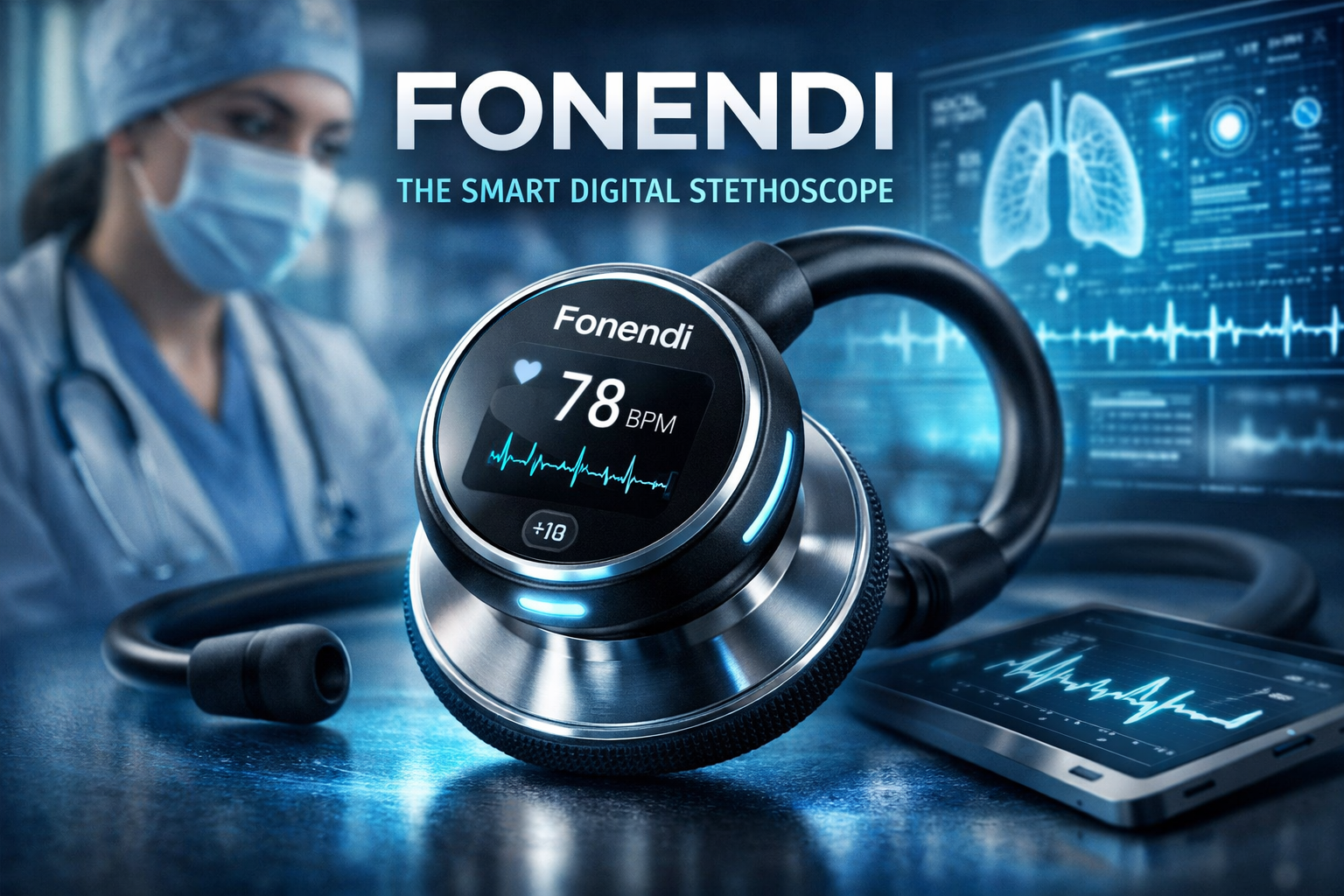
Fonendi: The Smart Digital Stethoscope Transforming Modern Patient Monitoring
Healthcare is moving fast. From electronic health records to AI-driven diagnostics, every tool is becoming smarter. In this wave of innovation, Fonendi stands out as a powerful advancement in clinical assessment. It takes the traditional stethoscope—one of medicine’s oldest tools—and upgrades it for the digital age.
Fonendi is not just about hearing heartbeats or lung sounds. It’s about improving diagnostic accuracy, reducing clinical errors, and helping healthcare professionals make better decisions in real time. In a world where early detection saves lives, tools like Fonendi are changing how patient care is delivered.
Let’s explore what makes Fonendi different and why it is becoming essential in modern healthcare settings.
What Is Fonendi?
Fonendi is an advanced digital stethoscope designed to enhance auscultation—the practice of listening to internal body sounds such as heartbeats, lung airflow, and bowel movements. Unlike traditional acoustic stethoscopes, Fonendi uses digital sensors and signal processing technology to amplify and clarify sounds.
But it goes further. Fonendi can analyze sounds in real time, store recordings, and integrate data into digital systems. This makes it a valuable tool in hospitals, clinics, telemedicine environments, and even medical education.
Instead of relying solely on human hearing, Fonendi combines clinical skill with technology. The result is more precise patient monitoring and faster diagnostic decisions.
Why Traditional Stethoscopes Needed an Upgrade
For more than two centuries, the stethoscope has been a symbol of medicine. Yet it has limits. Sound quality depends heavily on the clinician’s hearing ability, background noise levels, and device quality. In busy hospitals, subtle heart murmurs or faint lung crackles can be missed.
Common challenges with traditional stethoscopes include:
- Background noise interference
- Limited sound amplification
- No recording or playback capability
- No data storage for later review
- No integration with digital medical records
Fonendi addresses these issues through advanced digital auscultation. It enhances sound clarity and filters out environmental noise, allowing clinicians to detect abnormalities with greater confidence.
Key Features That Set Fonendi Apart
Advanced Sound Amplification
Fonendi uses high-sensitivity sensors to capture even faint physiological sounds. Digital amplification improves clarity without distortion. This is especially helpful in detecting subtle cardiac murmurs or early-stage respiratory abnormalities.
Real-Time Data Analysis
One of Fonendi’s most powerful features is its ability to analyze sound patterns instantly. Algorithms can detect irregular heart rhythms, abnormal lung sounds, and other warning signs during examination.
This supports clinicians in identifying conditions such as arrhythmias, bronchial congestion, or valve disorders more efficiently.
Noise Reduction Technology
Hospitals are rarely quiet places. Fonendi includes built-in noise cancellation that reduces background sounds. This allows doctors and nurses to focus only on relevant patient sounds, even in emergency rooms or intensive care units.
Recording and Playback
With Fonendi, clinicians can record heart and lung sounds for documentation or consultation. This is valuable for:
- Second opinions from specialists
- Monitoring disease progression
- Medical education and training
- Telehealth consultations
Being able to replay sounds reduces diagnostic uncertainty and improves clinical accuracy.
Seamless Digital Integration
Fonendi can connect to electronic health record systems and mobile devices. This allows patient data to be stored securely and reviewed later. In remote healthcare settings, clinicians can share sound recordings with specialists instantly.
This feature supports modern telemedicine and remote patient monitoring programs.
How Fonendi Improves Patient Care
Faster and More Accurate Diagnosis
When sound quality improves, diagnosis improves. Fonendi’s enhanced clarity allows clinicians to detect abnormalities earlier. Early detection leads to early intervention, which often results in better outcomes.
For example, early detection of abnormal lung sounds can lead to prompt treatment of pneumonia or asthma exacerbations. Similarly, identifying irregular heart rhythms early can prevent serious complications.
Better Monitoring for Chronic Conditions
Patients with chronic heart or lung conditions require regular monitoring. Fonendi allows consistent tracking of physiological sounds over time. Comparing recordings helps clinicians identify subtle changes that might signal worsening disease.
This is particularly useful in managing conditions like chronic obstructive pulmonary disease, heart failure, and congenital heart defects.
Support for Telemedicine
Telehealth has grown rapidly in recent years. Fonendi supports remote diagnostics by enabling clinicians to transmit high-quality sound recordings during virtual consultations.
Instead of relying only on patient descriptions, doctors can listen to actual heart and lung sounds remotely. This enhances virtual care and reduces unnecessary hospital visits.
Improved Training for Medical Students
Medical education depends heavily on learning how to recognize abnormal sounds. Fonendi allows instructors to record and replay authentic patient sounds. Students can listen multiple times, improving their diagnostic skills.
This practical approach strengthens clinical competence and builds confidence in future healthcare providers.
Real-World Applications of Fonendi
Fonendi is already making an impact in various healthcare environments.
In emergency departments, rapid assessment is critical. Clear heart and lung sounds can guide immediate treatment decisions.
In rural clinics, access to specialists may be limited. Fonendi enables healthcare workers to share recordings with cardiologists or pulmonologists in urban centers.
In home healthcare, nurses can monitor elderly patients more effectively. If abnormal sounds are detected, early action can prevent hospital admissions.
In pediatric care, detecting faint heart murmurs in children becomes easier with enhanced sound amplification.
These practical uses demonstrate that Fonendi is not just a technological upgrade—it is a clinical support system.
The Technology Behind Fonendi
Fonendi relies on digital signal processing. Microphones convert acoustic vibrations into digital signals. These signals are then filtered, amplified, and analyzed by integrated software.
Some versions may use machine learning algorithms to recognize patterns associated with specific conditions. Over time, as more data is collected, diagnostic accuracy can improve further.
Data encryption ensures patient privacy. Secure transmission protocols protect sensitive medical information during remote consultations.
By combining hardware precision with intelligent software, Fonendi bridges the gap between traditional examination and digital healthcare.
Addressing Concerns About Digital Stethoscopes
Some clinicians worry that digital tools may replace clinical judgment. In reality, Fonendi is designed to assist, not replace, healthcare professionals.
Clinical expertise remains essential. Fonendi simply enhances perception and provides objective data. It supports decision-making but does not override it.
Others question durability and ease of use. Fonendi is built for clinical environments. Its user interface is simple, and training time is minimal. Most professionals adapt quickly.
Cost is another concern. While digital devices may have higher upfront costs than traditional stethoscopes, improved diagnostic accuracy and reduced hospital readmissions can offset expenses over time.
Why Fonendi Matters in the Future of Healthcare
Healthcare is becoming more data-driven. Objective measurements are replacing subjective impressions. Fonendi aligns perfectly with this shift.
It improves documentation, strengthens diagnostic confidence, and supports collaborative care. In an era where patient safety and efficiency are top priorities, such tools are not luxuries—they are necessities.
As healthcare systems face rising patient loads and limited resources, technologies that increase efficiency without compromising quality are invaluable.
Fonendi represents the evolution of auscultation. It keeps the human touch of listening to a patient while adding the power of digital precision.
Practical Tips for Healthcare Providers Considering Fonendi
If you are thinking about integrating Fonendi into your practice, consider these steps:
- Evaluate your clinical needs and patient volume
- Assess compatibility with your electronic health record system
- Provide brief training sessions for staff
- Use recording features for complex cases
- Monitor improvements in diagnostic accuracy over time
These simple actions can help maximize the benefits of this digital stethoscope.
Frequently Asked Questions (FAQs)
What makes Fonendi different from a traditional stethoscope?
Fonendi uses digital sensors and software to amplify, filter, and analyze body sounds. Traditional stethoscopes rely solely on acoustic transmission without digital enhancement or recording capability.
Can Fonendi detect heart problems?
Fonendi can help identify irregular heart rhythms, murmurs, and abnormal sounds. However, it supports clinical assessment and does not replace advanced diagnostic tests like echocardiograms.
Is Fonendi suitable for telemedicine?
Yes. Fonendi allows sound recording and digital sharing, making it highly effective for remote consultations and virtual care.
Does Fonendi require special training?
Most healthcare professionals adapt quickly. Basic orientation is usually enough to use its features effectively.
Is patient data secure with Fonendi?
Modern digital stethoscopes like Fonendi use encrypted data transmission and secure storage systems to protect patient information.
Conclusion: Embrace the Future of Clinical Listening
Medicine has always relied on careful listening. Fonendi honors that tradition while bringing it into the digital era. With enhanced sound clarity, real-time analysis, and seamless integration into modern healthcare systems, it empowers clinicians to deliver more accurate and efficient care.
As patient expectations grow and healthcare systems evolve, adopting innovative tools is no longer optional. It is essential.
If you are a healthcare provider looking to improve diagnostic precision and patient outcomes, now is the time to explore what Fonendi can offer. The future of clinical listening has arrived—don’t miss the opportunity to be part of it.




2 thoughts on “Fonendi: The Smart Digital Stethoscope Transforming Modern Patient Monitoring”