
Introduction
Crisp, juicy, and perfectly balanced between sweet and tart, the Honeycrisp apple has become one of the most loved apple varieties in the world. You’ll find it sliced into lunchboxes, blended into smoothies, or enjoyed fresh as a quick snack. But beyond its satisfying crunch and flavor, many people wonder about Honeycrisp apple nutrition data and whether it truly deserves its “healthy” reputation.
This guide takes a deep dive into the nutritional profile of Honeycrisp apples, explaining calories, vitamins, minerals, fiber content, and health benefits in a clear, practical way. Whether you are managing weight, improving digestion, or simply trying to eat smarter, this article will help you understand exactly what you get from every bite.
What Is a Honeycrisp Apple?
The Honeycrisp apple was developed in the United States and is known for its distinctive texture. Unlike softer apples, Honeycrisp apples have a firm, explosive crunch that releases juice when bitten. Their natural sweetness means many people enjoy them without added sugar or dips, making them a smart choice for clean eating.
From a nutrition standpoint, Honeycrisp apples share many qualities with other apples, but their size and sugar balance can slightly affect calorie and carbohydrate intake. Understanding this helps you make better portion and diet decisions.
Honeycrisp Apple Nutrition Data (Per Medium Apple)
A medium Honeycrisp apple weighing about 180 grams provides a balanced mix of energy, fiber, and micronutrients. While values may vary slightly depending on growing conditions, the average nutrition data looks like this:
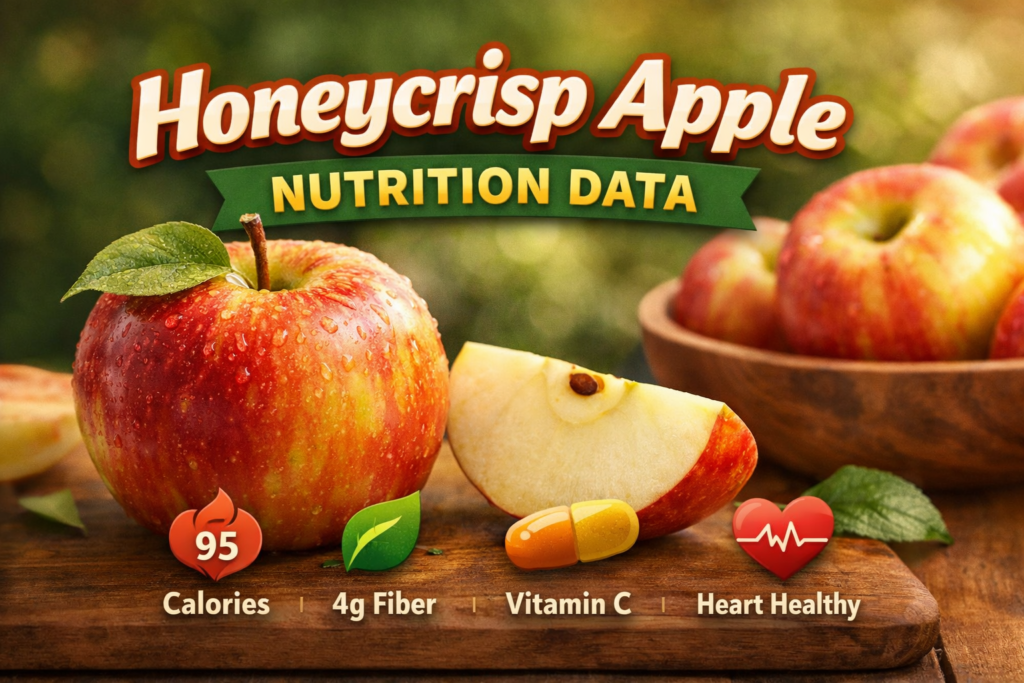
A single medium Honeycrisp apple contains roughly 95 calories. Most of these calories come from natural carbohydrates, which provide quick energy without added fats or cholesterol. Fat content is essentially zero, and protein is present only in trace amounts.
Carbohydrates make up about 25 grams per apple, including natural fruit sugars. Fiber content averages around 4 grams, which is significant for a single piece of fruit and supports digestion and fullness. Honeycrisp apples also provide small but meaningful amounts of vitamin C, potassium, and various plant compounds.
Calories and Carbohydrates Explained
Many people searching for Honeycrisp apple nutrition data are concerned about sugar and calories. While Honeycrisp apples are sweeter than some varieties, their sugar is naturally occurring and packaged with fiber, which slows digestion.
Compared to processed snacks with similar calorie counts, a Honeycrisp apple offers volume, hydration, and nutrients. This makes it a smart alternative to cookies or candy when cravings hit. Athletes and active individuals often use apples as a pre-workout snack because the carbohydrates provide fast, clean energy.
Fiber Content and Digestive Health
One of the strongest nutritional benefits of Honeycrisp apples is their fiber content. Most of this fiber comes from pectin, a soluble fiber that supports gut health.
Fiber helps regulate digestion, supports healthy bowel movements, and may help control blood sugar spikes after meals. People who include apples regularly often report better digestion and reduced snacking due to increased fullness.
Eating the apple with the skin on is essential, as much of the fiber and antioxidants are found in or just under the peel.
Vitamins and Minerals in Honeycrisp Apples
While apples are not vitamin powerhouses like citrus fruits, they still provide valuable micronutrients that contribute to overall health.
Vitamin C plays a role in immune function and skin health, and a Honeycrisp apple can supply around 10 percent of daily needs. Potassium supports heart health and helps regulate fluid balance in the body. Smaller amounts of vitamin K and B vitamins also contribute to metabolic and cellular functions.
These nutrients may seem modest, but when apples are eaten regularly as part of a balanced diet, their contribution adds up.
Antioxidants and Plant Compounds
Beyond standard vitamins and minerals, Honeycrisp apples contain antioxidants such as quercetin and flavonoids. These compounds help fight oxidative stress, which is linked to aging and chronic disease.
Research suggests that people who consume apples frequently may benefit from improved heart health and reduced inflammation. The antioxidants are most concentrated in the skin, reinforcing the importance of eating whole apples rather than peeling them.
Honeycrisp Apples and Blood Sugar Control
Despite their sweetness, Honeycrisp apples have a relatively moderate glycemic impact due to their fiber content. This means they raise blood sugar more slowly than refined carbohydrates.
For people with diabetes or insulin sensitivity, portion size still matters. Pairing an apple with a source of protein or healthy fat, such as nuts or yogurt, can further stabilize blood sugar levels and extend energy release.
Weight Management and Satiety
Honeycrisp apples are often recommended in weight management plans because they are low in calories yet high in volume and fiber. Eating one before meals may help reduce overall calorie intake by increasing feelings of fullness.
Real-life examples show that people who replace processed snacks with whole fruits like Honeycrisp apples often find it easier to maintain healthy eating habits. The crunch and sweetness satisfy both texture and flavor cravings.
Comparing Honeycrisp Apples to Other Varieties
When comparing Honeycrisp apple nutrition data to other apples like Granny Smith or Fuji, differences are small but noticeable. Honeycrisp apples tend to be slightly higher in natural sugars, while Granny Smith apples are more tart and slightly lower in carbs.
However, all apples share core nutritional benefits, including fiber, antioxidants, and hydration. Choosing Honeycrisp often comes down to taste preference rather than major nutritional differences.
Best Ways to Eat Honeycrisp Apples for Maximum Nutrition
Eating Honeycrisp apples raw with the skin intact preserves most of their nutrients. Cooking apples can reduce vitamin C content but still retains fiber and flavor.
Simple preparation ideas include slicing them into oatmeal, adding them to salads, or pairing them with nut butter for a balanced snack. These combinations enhance nutrient absorption and keep meals satisfying.
Are Honeycrisp Apples Good for Kids and Seniors?
Honeycrisp apples are suitable for all ages due to their mild flavor and nutrient profile. For kids, they provide natural sweetness without added sugar. For seniors, the fiber supports digestion and heart health.
In cases where chewing is difficult, apples can be lightly cooked or sliced thin without significantly compromising their nutritional value.
FAQs About Honeycrisp Apple Nutrition Data
How many calories are in a Honeycrisp apple?
A medium Honeycrisp apple contains about 95 calories, making it a low-calorie snack option.
Are Honeycrisp apples healthier than other apples?
They offer similar health benefits to other apples, with slight differences in sugar and taste rather than major nutritional advantages.
Can Honeycrisp apples help with digestion?
Yes, their fiber content supports gut health and regular digestion when eaten whole.
Are Honeycrisp apples good for weight loss?
They can support weight loss by promoting fullness and replacing higher-calorie snacks.
Is it safe to eat Honeycrisp apples every day?
Yes, eating one apple daily is generally safe and beneficial as part of a balanced diet.
Conclusion and Call to Action
Understanding Honeycrisp apple nutrition data shows why this popular fruit is more than just a tasty treat. With low calories, beneficial fiber, essential vitamins, and powerful antioxidants, Honeycrisp apples fit easily into a healthy lifestyle. They support digestion, heart health, energy levels, and weight management without requiring complicated preparation.
If you want a simple, delicious way to improve your daily nutrition, start by adding Honeycrisp apples to your routine. Grab one today, enjoy the crunch, and let this naturally nourishing fruit support your health one bite at a time.