
Imagine a dish so cozy it feels like a warm hug after shivering in icy winds. That’s soutaipasu—a hearty, authentic winter meal rooted in the snowy landscapes of northern Japan. While lesser known outside Japan, this savory comfort food has a rich history and flavor profile that deserves global attention.
In this article, you’ll learn what soutaipasu is, where it came from, why it’s beloved, how to make it at home, and tips for enjoying it like a local. Whether you’re a curious foodie or someone craving something new and comforting, this guide has you covered.
What Is Soutaipasu?
Soutaipasu is a traditional Japanese comfort dish originating in regions such as Hokkaido and Niigata, where long winters demand meals that warm both body and soul. This dish blends rich broth, seasonal vegetables, tender proteins, and regional ingredients in a way that’s simple yet deeply satisfying.
It isn’t just food it’s a culinary ritual tied to community, heritage, and seasonal change. In heavy snowfall areas, locals historically relied on nourishing meals like soutaipasu to sustain them through harsh winters.
The Origins of Soutaipasu in Japan
The snowy prefectures of Hokkaido and Niigata are legendary for their severe winter weather. With heavy snowfalls that can bury entire villages, residents developed hearty meals that could fuel long days of work and cold nights at home.
While soutaipasu may not have widespread international fame, its roots are deeply authentic:
- Hokkaido: Known for its dairy, seafood, and farming traditions, Hokkaido contributed key ingredients like creamy broths and fresh produce.
- Niigata: A region celebrated for its premium rice and rustic flavors added grounding elements to the dish’s character.
Traditional soutaipasu was meant to be communal often prepared in large pots and shared with family or neighbors during gatherings, festivals, and winter celebrations.
What Makes Soutaipasu Special?
At first glance, soutaipasu might seem like just another winter stew but it’s the harmony of elements that makes it remarkable.
Here’s what sets it apart:
- Deep, flavorful broth: A slow-simmered base often built from local stock—sometimes miso, sometimes seafood-based imbues every spoonful with umami-rich warmth.
- Seasonal vegetables: Root vegetables like daikon, carrots, and potatoes bulk up the dish while adding natural sweetness.
- Proteins with texture: Whether it’s tender chicken, thinly sliced pork, or silky tofu, proteins in soutaipasu balance richness and heartiness.
- Cultural balance: Soutaipasu reflects Japanese culinary principles—freshness, simplicity, and layered flavors without overwhelming complexity.
This dish is comforting, nourishing, and versatile. Locals often adapt it to available ingredients, making it both timeless and flexible.
A Closer Look at Traditional Soutaipasu Ingredients
Every region puts its own twist on soutaipasu, but some ingredients are common to most versions:
- Broth Base: Often a clear or slightly creamy stock made with kombu (kelp), dried bonito flakes, or miso for a signature savory backbone.
- Rice or Noodles: Some versions include soft-cooked rice grains in the broth, while others use thick noodles.
- Vegetables: Daikon, carrots, shiitake mushrooms, cabbage, and taro add body and nutrition.
- Protein: Chicken thighs, pork belly, or tofu cubes provide texture and substance.
- Seasonings: Soy sauce, sake, mirin, and a hint of ginger round out the flavor profile.
This balance of textures and flavors is why soutaipasu isn’t just a meal it’s a satisfying experience.
How to Make Soutaipasu at Home
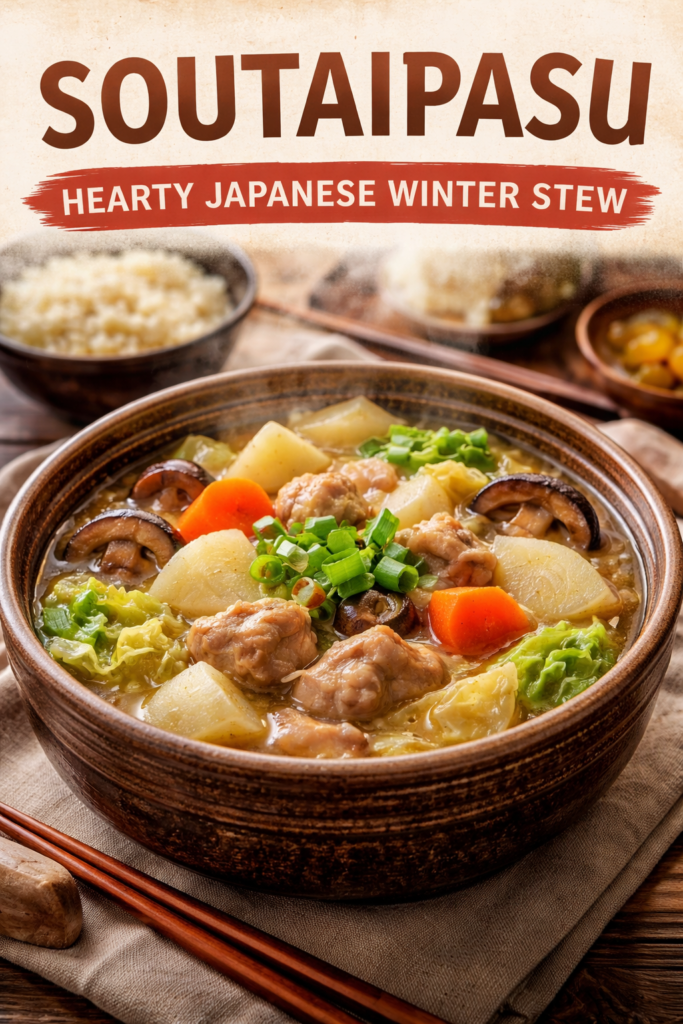
Making soutaipasu at home is easier than you might think, even if you don’t have access to Japanese specialty ingredients. Here’s a simple yet authentic approach:
Ingredients
- 1 lb (450 g) chicken thighs or pork belly, cut into bite-size pieces
- 1 large daikon radish, peeled and sliced
- 1 carrot, sliced
- 4–5 shiitake mushrooms, stemmed and sliced
- 1 small head of cabbage, chopped
- 4 cups dashi stock (or substituted with chicken broth + kombu)
- 2–3 Tbsp miso paste or soy sauce, to taste
- 1 Tbsp sake
- 1 Tbsp mirin
- 2 cups cooked Japanese rice (optional)
Directions
- Prepare the stock:
In a large pot, bring the dashi or broth to a gentle simmer. - Cook the proteins:
Add the chicken or pork and simmer until lightly cooked, skimming any foam. - Add vegetables:
Add daikon, carrots, cabbage, and mushrooms to the pot. Let simmer 15–20 minutes until vegetables soften. - Season the broth:
Stir in miso paste (or soy sauce), sake, and mirin. Adjust to taste. - Add rice (optional):
Stir in cooked rice if desired for extra heartiness. - Serve hot:
Ladle generously into bowls and enjoy immediately.
This version of soutaipasu is flexible you can swap ingredients based on preference or what’s in season.
The Health Benefits of Soutaipasu
Soutaipasu isn’t just comforting it’s nutritious. Here’s why it’s a healthy choice:
- Vegetable-rich: Root vegetables deliver fiber, vitamins, and natural sweetness without added sugars.
- Balanced macronutrients: Proteins, carbohydrates, and fats come together in a balanced way for sustained energy.
- Hydrating broth: Warm broth supports hydration and digestion, especially in cold weather.
- Low in unhealthy fats: Using lean proteins and fresh ingredients keeps it light without sacrificing flavor.
Because it’s naturally high in nutrients and low in processed components, soutaipasu makes a great winter staple for families.
Real-Life Stories: Why Soutaipasu Matters
In Niigata, an elderly farmer recalls preparing soutaipasu after a long day in the rice fields before winter. “We would gather around the pot, and it warmed us in ways nothing else could,” he says. “Even the children, who didn’t like cold weather, awaited dinner with excitement.”
In Hokkaido, a young chef revived the dish at a local restaurant, infusing traditional soutaipasu with seasonal seafood. “My grandparents taught me this recipe,” she says. “It represents resilience and comfort exactly what this region stands for.”
These stories show that soutaipasu isn’t just sustenance it’s memory, culture, and care on a plate.
Soups and Stews Compared: Where Soutaipasu Fits In
Many cultures have their version of a hearty winter dish think French pot-au-feu, Korean kimchi jjigae, or Italian minestrone. So where does soutaipasu stand?
- Compared to French pot-au-feu: Soutaipasu relies more on umami-rich stock and lighter seasoning, while pot-au-feu uses heavier aromatics and fats.
- Compared to kimchi jjigae: Soutaipasu is milder and creamier, with a focus on root vegetables, whereas kimchi jjigae is spicy-fermented.
- Compared to minestrone: Both use seasonal vegetables, but soutaipasu integrates Japanese flavor principles and regional proteins.
This comparison shows soutaipasu’s unique identity: welcoming, layered, yet accessible.
Tips for Perfecting Soutaipasu
To elevate your homemade soutaipasu:
- Use homemade stock if possible: A slow-simmered broth will always outperform store-bought alternatives.
- Don’t rush the vegetables: Let them become soft but not mushy to preserve flavor and texture.
- Balance your seasoning: Taste as you go; miso or soy sauce quantity can vary based on broth strength.
- Customize with toppings: Add scallions, a drizzle of sesame oil, or a soft-boiled egg for depth.
These small adjustments can transform your soutaipasu from good to unforgettable.
Modern Takes on Soutaipasu
Contemporary chefs are reinventing soutaipasu while honoring tradition. Some trends include:
- Seafood-forward versions with scallops or salmon from Hokkaido’s coast
- Vegetarian variants using shiitake stock and tofu for plant-based protein
- Fusion interpretations with influences from Korean, Chinese, or Western stews
These creative expressions show how soutaipasu continues to inspire innovation while remaining true to its roots.
Frequently Asked Questions (FAQs)
What does “soutaipasu” mean?
The exact etymology of “soutaipasu” is debated among culinary historians, but it broadly refers to a layered comfort dish designed to warm and nourish, particularly in snowy regions of Japan.
Is soutaipasu spicy?
Traditional soutaipasu is not spicy. Its flavor centers on savory umami and natural sweetness from vegetables and broth.
Can I make soutaipasu vegetarian?
Yes. Substitute vegetable stock or kombu dashi, and use tofu or mushrooms for protein.
What is the best time of year to eat soutaipasu?
While you can enjoy it year-round, soutaipasu shines in fall and winter when temperatures drop and hearty meals are most comforting.
What side dishes pair well with soutaipasu?
Simple sides like pickled vegetables, steamed rice, and green tea complement the rich broth and balanced flavors of soutaipasu.
Conclusion: Warm Up with Soutaipasu Today
Soutaipasu is more than a meal it’s a cultural treasure steeped in history, community, and flavor. Whether you’re enduring winter chills or simply craving something soulful and satisfying, this dish delivers authenticity and comfort in every bowl.
Ready to bring a taste of Japan into your kitchen? Try making soutaipasu tonight adapted to your ingredients and preferences and rediscover the joy of a heartwarming meal shared with those you love.
Let the warmth begin.