
Introduction
Flank steak often flies under the radar compared to ribeye or filet mignon, yet it remains one of the most nutrient-dense cuts of beef you can put on your plate. Known for its bold flavor and lean profile, flank steak appeals to athletes, health-conscious eaters, and home cooks looking for high-quality protein without excessive fat. Understanding flank steak nutrition can help you decide how it fits into a balanced diet and how to prepare it for maximum health benefits.
This guide explores calories, protein content, vitamins, minerals, and real-world tips for enjoying flank steak as part of a healthy lifestyle.
What Is Flank Steak?
Flank steak comes from the abdominal muscles of the cow, an area that gets significant use. Because of this, the cut is lean and flavorful but slightly tougher than premium steaks. When cooked correctly and sliced against the grain, flank steak becomes tender and satisfying.
Its nutritional value makes it a popular choice in cuisines around the world, from fajitas and stir-fries to grilled steak salads.
Flank Steak Nutrition Overview
Flank steak is prized for its high protein content and relatively low fat compared to many other beef cuts. A typical cooked serving of flank steak (about 3 ounces or 85 grams) provides a strong nutritional foundation.
Calories in Flank Steak
A 3-ounce cooked serving of flank steak contains approximately 160–170 calories, depending on trimming and cooking method. This moderate calorie count makes it suitable for both weight maintenance and weight-loss plans when portion sizes are controlled.
Protein Content
Protein is the standout nutrient in flank steak. The same serving delivers around 23–25 grams of high-quality protein, supporting muscle repair, satiety, and metabolic health.
Fat and Cholesterol
Flank steak is considered a lean cut of beef. It typically contains:
- About 6–8 grams of total fat
- Roughly 3 grams of saturated fat
- Around 70 mg of cholesterol
Compared to fattier cuts, flank steak offers robust flavor with less overall fat.
Vitamins and Minerals in Flank Steak
Beyond protein, flank steak nutrition includes essential micronutrients that play critical roles in everyday health.
Iron for Energy and Blood Health
Flank steak is a rich source of heme iron, the most easily absorbed form of iron. Adequate iron intake supports oxygen transport in the blood and helps prevent fatigue, particularly in active individuals and women.
Zinc for Immunity
Zinc supports immune function, wound healing, and hormone production. A single serving of flank steak can provide a significant portion of daily zinc needs.
B Vitamins for Metabolism
Flank steak contains several B vitamins, including:
- Vitamin B12, essential for nerve function and red blood cell formation
- Vitamin B6, which supports brain health and protein metabolism
- Niacin (B3), important for energy production
These nutrients contribute to sustained energy levels throughout the day.
Selenium and Phosphorus
Flank steak also provides selenium, an antioxidant mineral that supports thyroid function, and phosphorus, which is vital for bone health and cellular repair.
Health Benefits of Flank Steak
When eaten in moderation and prepared thoughtfully, flank steak offers several health advantages.
Supports Muscle Growth and Recovery
Thanks to its high protein content and complete amino acid profile, flank steak is ideal for muscle repair after workouts. Many athletes include it in post-training meals for recovery and strength gains.
Helps Maintain a Healthy Weight
Lean protein promotes fullness and helps regulate appetite. Including flank steak in balanced meals may reduce unnecessary snacking and support long-term weight management.
Promotes Heart Health (When Prepared Properly)
While red meat has been debated in nutrition circles, lean cuts like flank steak can fit into a heart-conscious diet. Choosing grilling, broiling, or pan-searing with minimal oil helps keep saturated fat intake in check.
Prevents Nutrient Deficiencies
Iron, zinc, and vitamin B12 deficiencies are common worldwide. Regular inclusion of nutrient-dense foods like flank steak can help bridge these gaps.
Flank Steak vs Other Steak Cuts
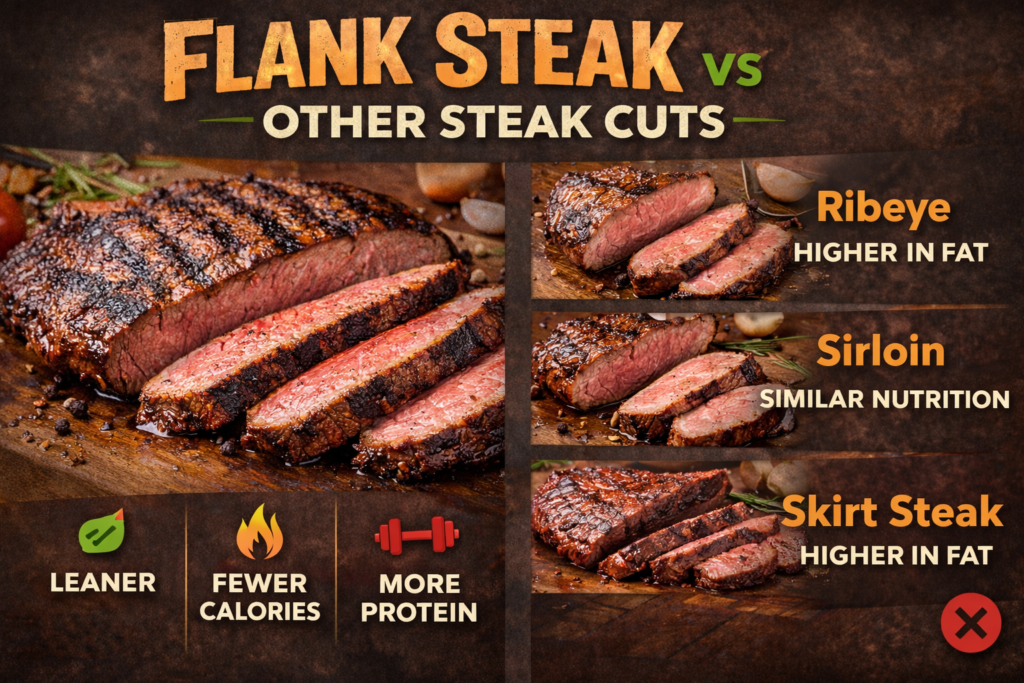
Understanding how flank steak nutrition compares to other cuts can clarify why it stands out.
Flank Steak vs Ribeye
Ribeye is significantly higher in calories and fat. While flavorful, it may not suit those seeking lean protein. Flank steak provides similar protein with fewer calories.
Flank Steak vs Sirloin
Sirloin is also lean and nutritious, but flank steak often contains slightly more protein per calorie and a stronger beef flavor.
Flank Steak vs Skirt Steak
Both cuts come from the abdominal area, but skirt steak typically has higher fat content. Flank steak is leaner and slightly higher in protein.
How Cooking Methods Affect Flank Steak Nutrition
Cooking technique plays a major role in preserving the nutritional value of flank steak.
Best Cooking Methods
Healthier cooking options include:
- Grilling over medium heat
- Broiling in the oven
- Pan-searing with minimal oil
- Stir-frying with vegetables
These methods maintain protein quality without adding unnecessary calories.
Avoid Overcooking
Overcooking can make flank steak tough and reduce moisture. Medium-rare to medium doneness preserves texture and flavor while maintaining nutrients.
Marinating for Better Digestion
Marinating flank steak with acidic ingredients like lemon juice or vinegar can improve tenderness and may enhance mineral absorption.
How to Include Flank Steak in a Healthy Diet
Flank steak fits well into a variety of meal plans when paired with wholesome sides.
Balanced Meal Ideas
- Grilled flank steak with roasted vegetables and quinoa
- Thinly sliced flank steak over a mixed greens salad
- Stir-fried flank steak with bell peppers and brown rice
These combinations provide fiber, vitamins, and sustained energy.
Portion Control Tips
Stick to 3–4 ounces per serving to enjoy nutritional benefits without excessive calorie intake. Pairing steak with vegetables helps create volume without extra calories.
Is Flank Steak Good for Specific Diets?
High-Protein Diets
Flank steak is ideal for high-protein eating patterns due to its lean profile and complete amino acids.
Low-Carb and Keto Diets
With virtually zero carbohydrates, flank steak works well in low-carb and ketogenic meal plans when paired with healthy fats and vegetables.
Weight Loss Diets
Its high protein-to-calorie ratio makes flank steak a smart choice for calorie-controlled diets focused on satiety.
Potential Downsides to Consider
While flank steak nutrition offers many benefits, moderation remains important.
- Excessive red meat intake may increase saturated fat consumption
- Processed sauces and marinades can add sugar and sodium
- Large portions can contribute to higher calorie intake
Balancing flank steak with plant-based foods helps maintain overall dietary health.
Frequently Asked Questions About Flank Steak Nutrition
Is flank steak healthy to eat regularly?
Yes, flank steak can be part of a healthy diet when eaten in moderation and prepared using low-fat cooking methods.
How much protein is in flank steak?
A 3-ounce cooked serving provides approximately 23–25 grams of protein.
Is flank steak better than chicken?
Flank steak contains more iron and vitamin B12 than chicken, while chicken is lower in saturated fat. Both can be healthy depending on dietary needs.
Does flank steak have carbs?
No, flank steak contains virtually zero carbohydrates, making it suitable for low-carb diets.
Is flank steak good for muscle building?
Yes, its high-quality protein and amino acid profile make it excellent for muscle growth and recovery.
Conclusion: Should You Add Flank Steak to Your Diet?
Flank steak nutrition offers an impressive balance of lean protein, essential vitamins, and minerals without excessive calories. Its versatility, bold flavor, and nutrient density make it a valuable addition to many eating styles, from fitness-focused plans to everyday balanced meals.
If you are looking for a flavorful cut of beef that supports muscle health, energy, and overall nutrition, flank steak deserves a regular spot on your menu. Choose smart cooking methods, watch portion sizes, and pair it with nutrient-rich sides to get the most benefit.
Ready to upgrade your meals? Try incorporating flank steak into your next healthy recipe and experience the difference firsthand.