
Introduction
Bacon is one of the most loved breakfast foods in the world. Its smoky aroma and crispy texture make it hard to resist. But behind the flavor, many people wonder about bacon nutrition facts and how healthy it really is. Is bacon just empty calories, or does it offer nutritional value when eaten in moderation?
This article breaks down bacon’s calories, fat, protein, vitamins, minerals, and health effects in simple terms. You will also learn how different types of bacon compare, how much is reasonable to eat, and practical ways to enjoy bacon without compromising your health.
What Is Bacon?
Bacon is typically made from pork belly, cured with salt and sometimes sugar, then smoked or dried. There are also alternatives like turkey bacon and beef bacon, which are processed differently but often marketed as lighter options.
Because bacon is cured and processed, its nutrition profile is unique. Understanding what is actually in a slice of bacon helps you make informed food choices.
Bacon Nutrition Facts (Per Serving)
A common serving size is two cooked slices of pork bacon. Nutrition values may vary by brand and cooking method, but on average you get:
- Calories: about 80–90
- Protein: 5–6 grams
- Total fat: 7 grams
- Saturated fat: 2–3 grams
- Cholesterol: around 15 mg
- Sodium: 350–400 mg
These numbers show that bacon is calorie-dense, high in fat, and contains a notable amount of sodium.
Calories in Bacon Explained
Most of the calories in bacon come from fat. This makes bacon energy-dense even in small portions. For example, adding three or four slices to breakfast can quickly increase calorie intake without making you feel very full.
People trying to lose weight often struggle with bacon because it is easy to overeat. However, when portions are controlled, bacon can still fit into a calorie-aware diet.
Protein Content in Bacon
Bacon does provide protein, which supports muscle repair and satiety. While it is not as protein-rich as eggs or lean meats, it can contribute to your daily intake.
Protein in bacon:
- Helps keep you full longer
- Supports muscle maintenance
- Adds flavor that makes meals more satisfying
That said, bacon should not be your primary protein source due to its fat and sodium levels.
Fat in Bacon: Good or Bad?
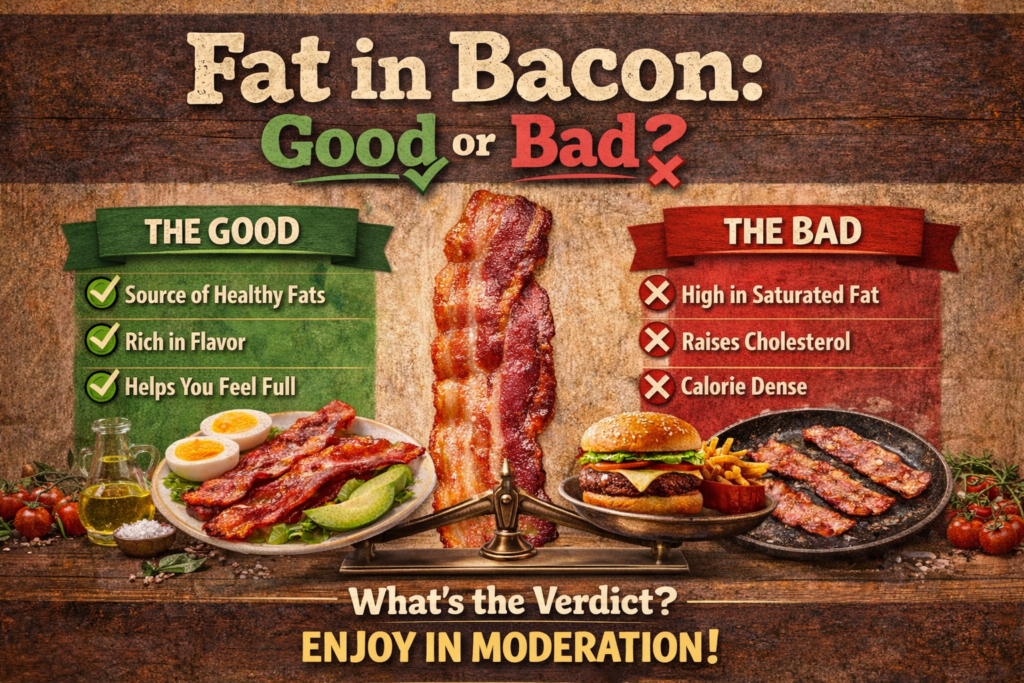
Bacon contains both saturated and unsaturated fats. Saturated fat is often linked to heart health concerns when consumed in excess.
Types of Fat in Bacon
- Saturated fat: Can raise LDL cholesterol if eaten frequently
- Monounsaturated fat: Similar to fats found in olive oil, though in smaller amounts
While bacon does contain some beneficial fats, the high saturated fat content means moderation is key.
Sodium Levels and Blood Pressure
One of the biggest concerns with bacon nutrition facts is sodium. Bacon is cured with salt, which significantly increases sodium levels.
High sodium intake may:
- Raise blood pressure
- Increase water retention
- Stress the heart and kidneys
People with hypertension or heart conditions should be especially careful. Choosing low-sodium bacon or limiting portion size can help manage this risk.
Vitamins and Minerals in Bacon
Bacon is not just fat and salt. It also contains some essential nutrients.
Key Micronutrients
- Vitamin B12: Supports nerve function and red blood cell production
- Niacin (Vitamin B3): Helps with energy metabolism
- Selenium: Acts as an antioxidant and supports thyroid health
- Zinc: Important for immune function
Although bacon is not a nutrient powerhouse, these vitamins and minerals add some nutritional value.
Bacon and Heart Health
Bacon’s relationship with heart health depends on frequency and portion size. Regular consumption of processed meats has been associated with higher risk of heart disease in several large population studies.
However, occasional bacon as part of a balanced diet is unlikely to cause harm in healthy individuals. The real issue arises when bacon is eaten daily alongside other processed foods.
Bacon in Popular Diets
Bacon in Low-Carb and Keto Diets
Bacon is popular in low-carb and ketogenic diets because it contains almost no carbohydrates. Its high fat content aligns well with keto macros.
However, keto followers still need to watch sodium and processed food intake. Whole food fats like avocado and olive oil should remain staples.
Bacon in High-Protein Diets
While bacon contributes protein, it is less efficient than lean meats. Relying too heavily on bacon may increase fat intake more than intended.
Is Turkey Bacon Healthier Than Pork Bacon?
Turkey bacon is often seen as a healthier alternative, but the truth is more nuanced.
Comparison Highlights
- Turkey bacon usually has fewer calories and less fat
- Sodium levels can be similar or even higher
- Protein content is slightly lower
Reading nutrition labels is essential. Some turkey bacon products are highly processed and do not offer significant health advantages.
How Cooking Affects Bacon Nutrition
Cooking methods can change bacon’s nutrition profile.
- Pan-frying: Common, but leaves bacon sitting in its own fat
- Baking: Allows fat to drip away, reducing total fat
- Microwaving: Quick and can reduce grease
Baking bacon on a rack is often considered one of the better options for reducing excess fat.
How Much Bacon Is Safe to Eat?
There is no universal rule, but moderation is widely recommended.
A practical approach:
- Enjoy bacon occasionally, not daily
- Limit portions to one or two slices
- Balance meals with vegetables and whole foods
Treat bacon as a flavor enhancer rather than a main protein source.
Practical Tips to Enjoy Bacon More Healthfully
You do not have to give up bacon completely. Small changes can make a big difference.
- Choose nitrate-free or uncured options when possible
- Pair bacon with fiber-rich foods like vegetables
- Use bacon bits to add flavor instead of whole strips
- Drink water to offset sodium intake
These habits help reduce potential downsides while keeping the enjoyment.
Real-Life Example: Balanced Breakfast with Bacon
A balanced breakfast might include:
- One slice of bacon
- Two eggs
- Whole-grain toast
- Fresh fruit
This combination provides protein, fiber, vitamins, and energy without relying too heavily on bacon alone.
Common Myths About Bacon Nutrition
Many myths surround bacon.
Some people believe bacon has no nutrients at all, while others see it as a health food. The truth lies in the middle. Bacon offers some nutrients but also comes with health risks when overconsumed.
Understanding facts instead of extremes leads to better dietary choices.
FAQs About Bacon Nutrition Facts
Is bacon healthy to eat every day?
Eating bacon every day is generally not recommended due to high sodium and saturated fat. Occasional consumption is a better choice.
How many calories are in one slice of bacon?
One cooked slice typically contains 40–45 calories, depending on thickness and cooking method.
Does bacon have carbs?
Bacon contains very few carbohydrates, usually less than 1 gram per serving.
Is bacon good for weight loss?
Bacon can fit into weight loss plans in small amounts, but its high calorie density makes portion control essential.
What is the healthiest type of bacon?
Options labeled low-sodium or uncured may be slightly better. Leaner cuts and mindful portions matter more than the type alone.
Conclusion: Should You Eat Bacon?
Bacon is flavorful, satisfying, and culturally loved, but it is not a health food. Understanding bacon nutrition facts helps you enjoy it wisely. When eaten in moderation, paired with whole foods, and prepared thoughtfully, bacon can be part of a balanced diet.
The key is awareness, portion control, and overall dietary balance. If you enjoy bacon, there is no need to eliminate it completely. Instead, make informed choices and treat it as an occasional indulgence rather than a daily staple.
If you found this guide helpful, consider reviewing your current eating habits and making small adjustments that support long-term health while still allowing room for the foods you love.
One Response