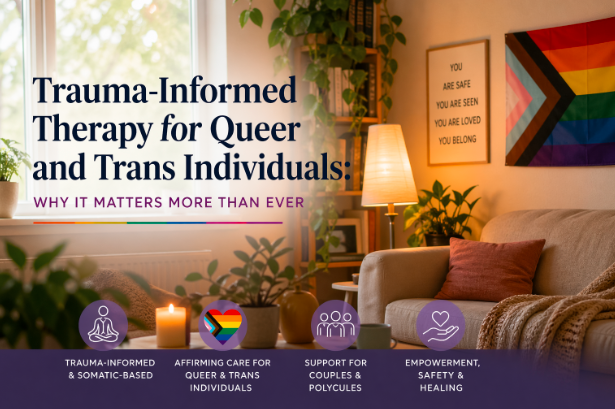
Trauma-Informed Care Matters for LGBTQ Communities
Here, therapy options look different now – yet many LGBTQ+ individuals still face barriers to support that truly sees them. Typical counseling often overlooks crucial layers: the weight of stigma alongside selfhood, how enduring hardship molds actions day by day. Now, movement-rooted approaches step in. Healing through bodily awareness reaches deep-held hurt even before speech finds it.
Here is what unfolds if therapy truly sees hurt. A closer look at trauma-aware support shows change beyond terms. For LGBTQ+ people, the reason hits deep – past injuries ask for fresh ways of hearing. Inside motion might unlock something. Where talking ends, bodily practice begins.
Queer and Trans Trauma Understanding
Heavy things often settle slowly. Not every weight comes from a single crash. For queer and trans folks, pressure builds across years, fed by systems that keep showing up. A comment here, ignored there – small cuts gather without fanfare. Overlooked at work, misnamed by family, watched too close in public bathrooms – the pieces stack, lopsided and unrelenting
- Family rejection or lack of acceptance
- Discrimination in workplaces or public spaces
- Bullying or harassment during formative years
- Healthcare inequities or misgendering
- Internalized stigma and identity suppression
Deep down, soreness or tightness can take root when hard times stack one after another. Not sparked by a single incident, but growing quietly through repeated strain, this ongoing weight often earns the label complex trauma. Thoughts race without rest. A quiet ache stays too long. Over months or years, pressure settles in – less about what happened once, more about what never got relief.
What Is Trauma Informed Therapy?
Healing begins only after rough times get acknowledged in this approach. Since comfort matters more than speed, triggers stay avoided on purpose. What keeps things steady? A clear priority: feeling safe, inside and out. Without rushing, trust shows up when silence gets honored. Progress seems reachable once choices move into the hands of the individual. What someone says fits once you understand their past. Healing takes its own time, growing best when dignity never wavers
- Safety (emotional and physical)
- Trustworthiness and transparency
- Choice and autonomy
- Collaboration between client and therapist
- Empowerment and validation
Most days, healing moves faster if the guide knows ache alongside honor – someone noticing your gender, your love, your shape of existing, no second thoughts needed. Truth sits in being felt, never justified.
Somatic Therapy and Healing
Most ways of working with trauma focus on talking. Body-centered approaches go a different path, linking movement and feeling with mental patterns instead. Sensations become part of the process, not just words.
Stiffness might linger where emotions once tightened. Energy dips when old moments stay trapped inside. Ache that won’t quit could be the shape of unspoken stress. Nervous tension often maps where feelings were never moved through. Movement helps unravel what words cannot reach
- Reconnect with bodily sensations
- Release stored stress and trauma
- Develop emotional regulation skills
- Build a sense of safety within their own body
Most people lose track of how their body feels when pain sticks around, or stress piles up over months. A moment of stillness – just feeling air move in and out – can shift something small but real. Healing isn’t always loud; sometimes it shows up through tiny motions, like fingers brushing skin without fear. When trauma has dimmed sensation, soft attention works better than force ever could. Step by step, weight on the floor, breath held gently – that’s where return begins.
Why affirming care matters
Most important? It is not merely being accepted. Showing up makes a difference. Listening matters too. For some in the LGBTQ+ community, old wounds linger. Therapists once brushed them aside. That betrayal shapes how trust grows now – slowly, if at all.
An affirming, trauma-informed therapist understands:
- The impact of minority stress
- The importance of chosen family and community
- Some folks build connections in many forms, like clusters of linked partnerships instead of pairs alone
- The intersectionality of identity (race, culture, ability, etc.)
Most therapists find things shift a bit once they start walking their own talk. It happens slowly, sometimes without notice – but change shows up more clearly in those who apply what they teach. Some skip it entirely, true. Still others? They watch small shifts grow into something steady.
Therapy for couples and polycules
Not every relationship in queer communities follows the usual path – some include openness, others more than one partner. Traditional therapy doesn’t always catch on fast enough to what that really means.
Trauma-informed therapy for couples and polycules focuses on:
- Communication needs to be clear, while consent matters just as much
- Navigating boundaries and emotional safety
- Addressing attachment styles and triggers
- Building trust across multiple relational connections
Belonging shows up when folks around you stop judging. Quiet approval lets people feel seen without needing to prove anything. Noticing happens easier when fault-finding stays absent.
Finding the Right Therapist
Most times, healing starts right there at the table – face to face. For folks in the LGBTQ+ circle, it can matter deeply if the person opposite shows up with quiet care, zero judgment. Therapy works better when you feel truly known, not just heard.
Start anywhere – someone tracing who they are might land on weronikarogula.com, where support flows through movement and sensation, built for queer, trans, and poly folks. Because insight carries more weight when it’s rooted in lived experience, less gets lost in translation. Understanding slips in quietly, like a rhythm already known.
trauma informed somatic therapy helps body and mind heal together
Therapy built around real needs of queer and trans folks? That kind of care lands harder. Not perfect – just nearer. Shows up beside a person rather than dropping rules from above. Results change once assumptions fall quiet. Less checklist energy, more space to see what’s missing. Names shift. Voices rise that didn’t before. Most of the time, safety grows piece by piece. Slow steps build trust, though it might never come. On certain mornings, stepping through the door is enough. Recovery slips in when you’re looking elsewhere
- Improved emotional regulation
- Reduced anxiety and depressive symptoms
- Stronger sense of identity and self-worth
- Healthier relationship patterns
- Increased body awareness and comfort
Weeks pass. Then, stillness shows up – subtle, unannounced. Balance shifts; footing firms without effort. Thoughts untangle, one by one. Strength arrives like morning light – gradual, undeniable. Ties deepen, not because they must, yet because they can. With others. Within. Presence stretches. Fragments gather. The world comes nearer, not louder, just clearer.
Changing Views on Therapy
These days, plenty hear the words – but embarrassment around inner struggles lingers, particularly within communities pushed to the edges. Culture shapes silence; fear of judgment builds walls just as past hurts often do. Awareness inches forward, yet stubborn blocks remain hidden beneath the surface.
Notice this: reaching out does not mean cracking under pressure – it means stepping ahead. When treatment puts trauma at the center, attention turns not to mending shattered pieces but understanding moments lived through. Labels fade into background noise while personal history finds space to speak. Where criticism once took root, care now begins to rise.
Final Thoughts
Something clicks when queer and trans folks find a therapist who just understands – no explanations needed, no sideways glances. While many paths fall short, body-based healing after harm creates change you can feel deep down. Typical talk-only routes often drift off course; here, silence speaks louder than sentences ever could. Rather than rushing to solve, presence opens – a quiet stretch where air fills lungs like first light through blinds.
Body awareness shapes identity more than most notice. When safety settles into the background, attention shifts inward. Not reacting every time life pushes becomes possible. Presence shows up quietly, not through effort but through consistency. Wholeness isn’t built fast – it forms where trust and recognition meet. The self strengthens slowly, like roots under soil.
Picture this – someone who sees things like you do could be the one to talk to about therapy. Things shift in a quiet way once you find that person, simply because their understanding runs deep.